
CREDIT INFORMATION

Due to recent "Cyber Theft" and "Fraudulent Copyright Violations" please contact main office 936-756-0442

EMPLOYEE LIST

For employee information please contact main office 936-756-0442

David Heintz
President
A & H Electric Co.
3505 N. Loop 336 West
Conroe, Texas 77304
Office: (936) 756-0442

Open post certified electrician in Conroe

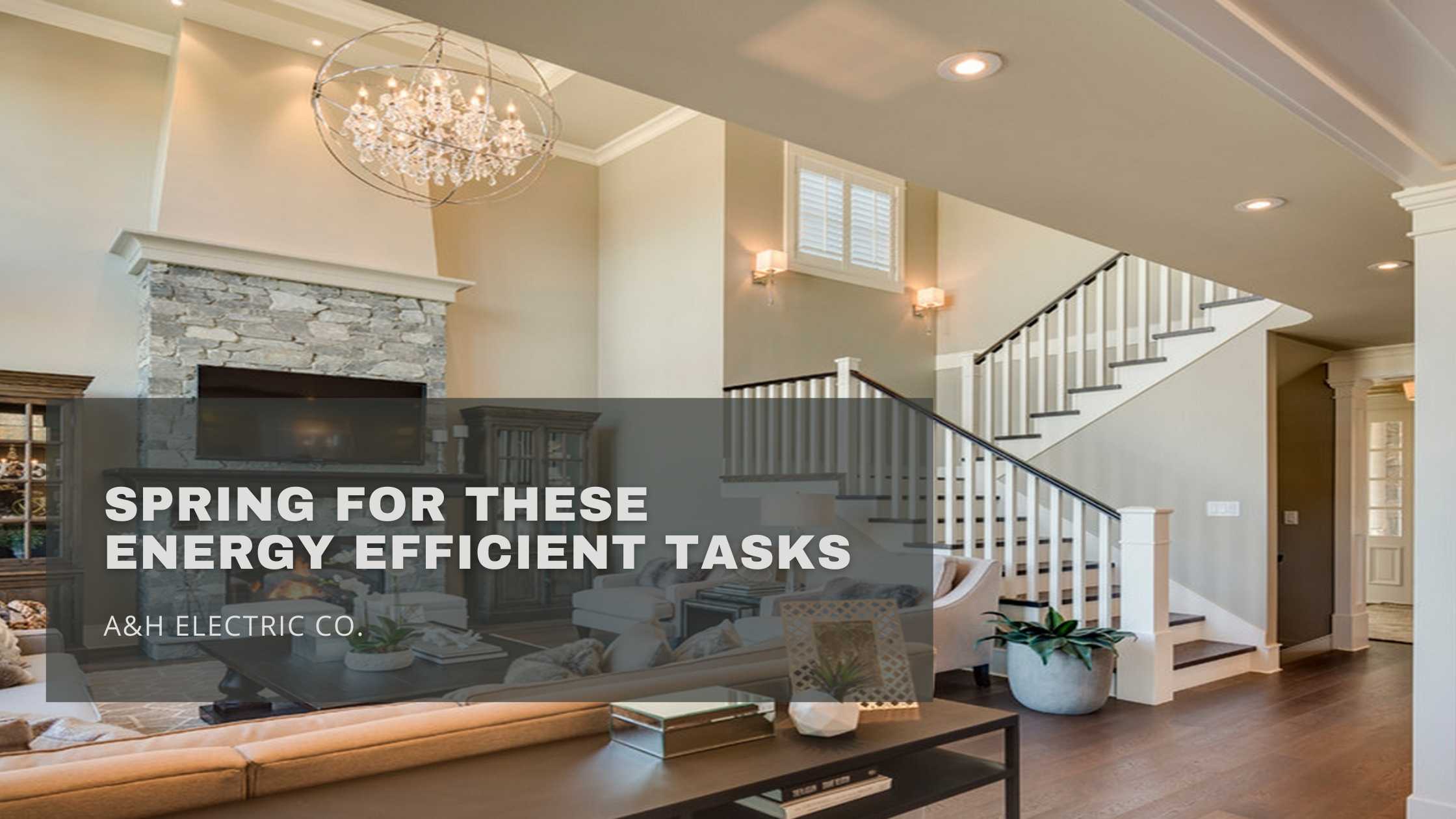
Spring for These Energy Efficient Tasks

According to the U.S. Energy Information Administration (EIA), as of 2020, the average Texas household consumed 1,132 kilowatt-hours (kWh) per month at a $0.1171 per kWh for a total average monthly electricity bill of $132.59. Of course, these bills differ by household, depending on their specific usage and equipment choices. Other factors, including the square footage of your home and the number of household members, may influence your monthly charges.

Also, according to the EIA, a substantial percentage of a household’s annual energy consumption is spent on space heating and air conditioning. The administration adds that water heating, lighting, and refrigeration accounted for 22 percent in 2021. The remaining share of home energy use was used to power many household appliances, electronics, and other devices.

Unfortunately, as this data shows, powering our homes isn’t cheap. However, by examining your usage and identifying efficiency improvements, you have the potential to save energy and money. In addition, according to ENERGY STAR, you’ll be doing your part to help protect the environment. While many of these tips are do-it-yourself, others, like installing a smart thermostat and conducting electrical inspections, should be completed by a certified electrician in Conroe.

You Have the Power to Save By

Changing HVAC Air Filters

You should perform this task every three months for the best effects. A clean filter promotes adequate airflow and ensures your HVAC system operates efficiently. If you suffer from seasonal allergies, you may want to consider a HEPA filter.

Sealing Air Leaks and Drafts

According to the ENERGY STAR program, you can save up to $200 per year in heating and cooling costs by identifying air leaks in your building’s envelope and sealing them using cost-effective materials, such as caulk. These savings also reflect adding insulation.

Installing a Smart Thermostat

Installing a smart learning thermostat, allowing you to control and monitor the temperature from your smart device, can save you up to $100 per year on heating and cooling costs. The key to these savings is to choose an ENERGY STAR-certified model.

Swapping Out Your Lightbulbs

Another cost-efficient way to save energy is to swap out the bulbs in your light fixtures with CFLs or LEDs that are ENERGY STAR certified. These lightbulbs use 90 percent less energy and last 15 times longer. Also, make sure to purchase dimmable bulbs.

Installing Dimmable Switches

Once you’ve purchased dimmable light bulbs, have a certified electrician in Conroe come to your home to install dimmer switches, which allow you to set the brightness in a room. These are particularly ideal for children and family rooms.

Contact a Certified Electrician in Conroe

A&H Electric Co. has over thirty years of experience providing residential and commercial electrical repair, maintenance, and installation. We offer a full suite of services, not limited to electrical safety inspections and whole home rewiring, with all work performed by experienced technicians. Please don’t hesitate to schedule an appointment anytime you need a certified electrician in Conroe to service your home or business, even if it’s after hours, as we offer 24-hour emergency repairs.

Join the A&H Electric Co. Family! A&H Electric Co. is currently looking for experienced electrical technicians to join our team. You must have prior experience providing residential and commercial electrical repair, maintenance, and installation. If you’re interested in becoming part of the A&H Electric family, please contact us at (936) 756-0442 or complete the online job application.

Resources:

“2020 Average Monthly Bill – Residential.” U.S. Energy Information Administration (EIA), 2020.

“Heat & Cool Efficiently.” ENERGY STAR.

“How is electricity used in U.S. homes? U.S. residential sector electricity consumption by major end uses in 2021.” U.S. Energy Information Administration (EIA), n.d.

“Start Saving Now: Featured Actions.” ENERGY STAR.

“Texas State Profile and Energy Estimates.” U.S. Energy Information Administration (EIA), 2019.

“Use of energy explained.” U.S. Energy Information Administration (EIA), June 23, 2021.

Resolve to Save Energy in 2018

save energy

The beginning of a new year provides the perfect opportunity to update your home. When setting goals for your home, it’s a good idea to start by looking at your home’s energy efficiency or possibly, lack of. One goal that is easy to keep and will put money directly back into your wallet is to resolve to save energy.

Here are some ways to save energy in 2018.

Seal any air leaks. Sealing air leaks is a cost-effective way to cut heating and cooling costs, improve system durability, and increase comfort. It can also help to create a healthier indoor environment. The Department of Energy recommends using caulk and/or weatherstripping to seal leaks arounds doors, windows, and where any plumbing or electrical wiring comes through the home’s envelope.

Choose energy-saving lighting. LED lighting doesn’t just use less energy than traditional incandescent lighting, it also lasts up to 25 times longer, and turns on at full brightness almost instantly. LEDs are quite affordable – you can pick up a box of eight for under $20 at your local home improvement or hardware store. LEDs can also be controlled via a smart switch, or if using smart LEDs, a hub.

Install and set a programmable thermostat. It’s no secret that heating and cooling costs account for more than 40% of a home’s energy use. Switching from a manual to a programmable thermostat is one way to save up to 10% a year. The most basic programmable thermostat can be self-installed in under an hour, allowing you to easily set temperature settings for different times of the day. The best programmable thermostats come with a built-in application that can be controlled from a smartphone or tablet allowing you to control and monitor the temperature even when you’re not home.

Use a surge protector for your electronic equipment. Surge protectors (also called surge suppressors) protect your electronic equipment – home theater systems and gaming computers included – from damage in the event of random power spikes or surges. When shopping for a surge protector, it’s a good idea to get one with more outlets than you currently need, so you can add more components later. You can save $100 a year just by plugging your devices into a surge protector and turning it off at night.

Hire a professional to inspect and maintain your electrical system. A certified and licensed electrician will do a comprehensive audit of your entire electrical system, ensuring all wires, systems and components meet legal safety standards. Upon completion of the inspection, you will be provided with a detailed checklist, which includes areas in need of immediate attention and recommendations for improvement. The Electrical Safety Foundation recommends having a professional inspection done:

  • When purchasing a home
  • When a home is past 40 years old
  • When adding or upgrading an appliance
  • When completing major home renovations

Energy-Saving Tips for the Office

We have talked extensively about ways to save energy at home; now it is commercial business owners and managers turn for energy-saving tips. The following tips can yield significant savings.

Lights Off

Turn off lights when not needed. Turning off fluorescent lights when you plan on being out of a room for more than 15-minutes saves energy, extends overall lamp life, and reduces replacement costs. Contrary to popular belief, turning lights on and off does not use more electricity than leaving the lights on.

Improve Lighting Systems

Lighting consumes 25 to 30% of energy in commercial buildings (ENERGY STAR). Replacing incandescent bulbs with energy-efficient LED or fluorescent bulbs can reduce electricity consumption and improve your employee’s comfort. You may also want to consider replacing inefficient or outdated lighting fixtures.

Use Programmable Thermostats

When programming your thermostat, consider your normal business hours. During these hours, program the thermostat to 68˚F in the winter, and 78˚F in the summer. Depending on the season, program thermostats up or down outside these hours. Consider installing locking devices on thermostats to maintain desired temperature settings.

Establish a Preventative Maintenance Program

Establish an effective preventative maintenance program for your electrical system and equipment. Benefits include reduced repair costs, minimized or eliminated downtime, extended system and equipment longevity, and personal safety. Contact a certified electrician who services commercial offices in your area to get started.

Purchase ENERGY STAR Certified Office Equipment

When purchasing new office equipment, look for the ENERGY STAR label. The ENERGY STAR office equipment program promotes energy-efficient computers, monitors, imaging equipment, enterprise servers, data center storage equipment, small and large network equipment, and uninterruptible power supplies.

Light Bulbs: Learn the Differences Between Them

Did you know that the average light bulbs eat up 20 watts of electricity? Did you also know that with the recent changes in lighting technology, you, and only you have the ability to reduce the amount of electricity your home’s light bulbs use?

Learning the differences between today’s light bulbs can help you in choosing the right ones for your home or business. Here we’ve listed the most common types of light bulbs available in an effort to help you reduce high energy bills.

Incandescent Light Bulbs

Invented in the 1800s, incandescent light bulbs are the oldest and most common type of bulbs currently on the market today, however due to their relative inefficiency and short lifespans they are slowing making their way out.

Manufacturers are currently working on incandescent bulbs that use 24 percent less energy than those currently on the market. Incandescent bulbs are the least expensive type of bulbs you can purchase.

These type of bulbs work by connecting an electrical current that travels through a wire filament, heating up the filament as it goes, which almost needless to say produces heat as well as light.

Compact Fluorescent Lamps (CFLs)

Invented in 1976 – in response to the 1973 oil crisis – Compact Fluorescent Lamps (CFLs) can be distinguished from any other type of bulbs on the market due to their distinctively bold designs.

CFLs work by transmitting an electrical current through a tube containing argon, and a trace amount of mercury, in order to trigger the actual illumination. CFLs have a lifespan of 9 years

Considering that they use 75% less energy than incandescent light bulbs, you can expect to receive significant savings when you choose to use them, rather than choosing to use their competition.

Light-Emitting Diodes (LEDs)

Light-Emitting Diodes (LEDs), which were invented in the early 1960s, are rapidly taking over the lighting industry. This is due to their being highly effective.

LEDs work by connecting a diode (hence their name) to an electrical current. Electrodes are then triggered within the diode, which forces those electrodes to release photons, thus making light.

While the initial costs of LEDs are typically higher than any of the other light bulbs we’ve mentioned, their lifespan being 25% longer than incandescent bulbs, makes the price seem almost inconsequential.

A Professional Recommendation

If you’re looking to pave the way towards lower monthly energy bills, then you may definitely want to consider purchasing and installing LEDs throughout your home.

This post brought to by your friends at A&H Electric. If you would like more information, or are just in need of reliable electricity repair or installation services, please be sure to contact us at (936) 756-0442