CREDIT INFORMATION

Due to recent "Cyber Theft" and "Fraudulent Copyright Violations" please contact main office 936-756-0442

EMPLOYEE LIST

For employee information please contact main office 936-756-0442

David Heintz
President
A & H Electric Co.
3505 N. Loop 336 West
Conroe, Texas 77304
Office: (936) 756-0442

Holiday Electrical Safety Tips

It’s getting to be that time of year again!

Yeah sure, it may only be October 30th to some people, but to other’s it is the start of one of the most festive times of year. It is during the brief period between Halloween, which is tomorrow, and the New Year, which is 63 days away, when homeowners find themselves quite literally decking the halls.

Unfortunately, however, the holiday season is also one of the busiest times of year for hospital emergency rooms. In fact, according to the U.S. Consumer Product Safety Commission, more than 12,500 people per year are treated in hospital emergency rooms for injuries related to holiday decorations.

In addition, the National Fire Protection Agency, warns that 380 holiday related home structure fires were the direct result of holiday lights, decorations and trees within the years of 2007 to 2011. Holiday trees accounted for 230 of these home structure fires.

So as you can see the holiday season isn’t just about decking the halls, fighting the crowds on Black Friday, or exchanging gifts; it’s also about ensuring your safety so that you and your loved ones’ can enjoy this joyous time of year; preferably without incident.

Safeguard Your Family with These Holiday Electrical Safety Tips

Before flipping the switch and lighting up the neighborhood, or just your home, make sure you have followed these simple holiday electrical safety tips. These tips will ensure you’re able to safeguard yourself, your family and your home from electrical shocks and fires.

  • Thinking of using a real holiday tree? Make sure you keep it properly watered the entire time it’s inside your home. A dry tree can quickly burst into flames. Plus, a properly watered tree, will keep it looking good and smelling great while in your home.
  • Whether you plan on placing holiday lights inside or out, you should always check each strand thoroughly for any damaged or frayed cords, as well as loose connections prior to installation. You should also replace any older light sets since they may no longer be up to code.
  • To make sure your light sets stay in good condition, which will hopefully save you money on the expense of replacing them or their light bulbs, you should store them in a tightly sealed container when not in use (so for the other 11 months of the year).
  • You should always refrain from using nails, tacks, staples, or anything of that sort when hanging your holiday lights. To prevent power shortages from affecting your décor, use insulated hooks or holders. The nice thing about this is that if you get the clear ones you can just leave them up.
  • If the cords and plugs of your holiday lights are running across the ground you should elevate them by again using insulated hooks or holders. This will you help you avoid damage or shorts from wet conditions such as snow, rain and debris.
  • If you must run extension cords across the ground, you may want to tape them in place to prevent anyone from accidentally tripping over them, and injuring themselves. Use a bright colored duct tape so that it is visible to anyone visiting.
  • Only purchase lights that been laboratory tested. You will typically notice that these lights have a UL listing on the outside of the box. These will ensure that the lights you purchased have passed rigorous safety and performance standards.
  • Always adhere to the recommended usage for your lights. So if your lights say interior use only…then only use them inside. If they say exterior use only…then only use them outside. You will find that many of the light sets on the market today are rated for both interior and exterior use.
  • Always turn off your lights whenever you are sleeping (this includes on Christmas Eve) or away from home; even if it’s only for a short while.
  • Overloading electrical circuits is a BIG no, no! Just don’t do it.
  • Plug all outdoor lights into a ground fault circuit interrupter (GFCI) outlet. These outlets are designed to shut off the flow of power whenever a short is detected.
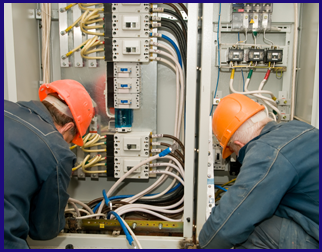
  • Contact a professional electrical repair technician and request an annual safety inspection be completed on your home’s electrical system prior to the start of the holiday season.
Happy Holidays!!!

Whole House Generators: Powering on Demand

Some dangers rear their ugly head without any warning, as we have already evidenced with the United States’ recent natural disasters, but knowing this – knowing that danger is around every dark corner of the world – doesn’t mean we shouldn’t or can’t protect ourselves for its arrival.

In fact, when we prepare ourselves for dangerous situations, our chances of surviving increases significantly. Taking precautionary measures such as ensuring you’re not left in the dark for any extended period of time should a storm take out your electricity aids in your survival just as much as any other measure.

This is especially important for older adults. As well as those that may be more susceptible to hypothermia (below normal body temperatures) or hyperthermia (exceptionally high fevers) during intense cold or heat conditions. Ensuring your electricity remains on is also important for maintaining your quality of life.

Whole House Generators: Your Solution to Power Outages

One solution, which experts all seem to agree on, is whole house generators. While these type of generators can be quite expensive, when you consider the fact that 3.5 million Americans can be left without power in any given week, they just may be worth the expense.

The way whole house generators work is actually quite simple. Built to look much like an air conditioning unit, except for the fact that they are enclosed and are much larger, these types of generators power on automatically in the event your home goes off the grid.

They typically supply enough energy for your family to maintain your quality of life until the power is completely restored. And, although they’re expensive, they have the added benefit of increasing your home’s value; thus presenting you with the chance to net some of your expense back should you ever decide to move.

Whole House Generators: What You Should Look For

  • Generators come in a variety of sizes and workload capacities. You’ll want to ensure the one you purchase is capable of handling everything that you’ll want it to power until electricity is restored.
  • You should look for generators that have built-in transfer switches as this will ensure you don’t have to face the elements in order to turn the unit on by hand.
  • You should look for the highest quality units for maximum durability. Those that are made from stainless steel resist corrosion better than any other type of generator currently available.
  • These types of generators typically operate with the use of either natural gas or liquidized petroleum gas therefore its important to inquire about their fuel efficiency.
  • Whole house generators require professional installation. It is important to locate a professional electrician to ensure the proper placement and installation of your new unit.

Home Automation Systems Save You Money

Automating Your Home

Home Automation SystemsAs home energy prices continue to climb…and climb…and, well you get the picture, in a time when many homeowners are still feeling the effects of a bad economy, home automation systems are being used to alleviate the headaches associated with a homeowner’s rising energy costs.

According to the U.S. Energy Information Administration, the average homeowner shells out more than $100.00 per month on home energy costs alone. Their HVAC system can be found guilty of costing them at least half of this expense.

Therefore, the best home automation systems must work to regulate and control a home’s HVAC system, as well as its main electricity hogs – namely appliances, lighting, electronics, etc.  Home automation systems can transform your home into a smart home by allowing you to control the following:

  • The automation of your home’s lighting. You can turn your lights on and off remotely or on a schedule.
  • The temperature in which your air conditioning and heating system works to cool or warm your home.
  • Can open your blinds during the day and close them at night. You again can do this remotely or on a schedule.
  • Feed your pets according to the schedule you set. You forgot to feed Fido before going to work? Log-in remotely and feed him/her at your leisure.
  • Command your garage door to open and close.
  • Have a freshly brewed pot of coffee awaiting you first thing in the morning by setting your coffee maker.

This is, of course, just a small list of the things home automation can do for you. To put it very simply, everything in your home – at least everything that works off electricity – can be automated according to your exact specifications, ensuring you your complete comfort and peace of mind.

So, what type of system is best for your needs? Here we, at A & H Electric, discuss some of the more popular automation systems that can be easily incorporated into your home.

Choosing the Correct Home Automation System

  • Smart Thermostats – Thermostats that only control your HVAC system. Once installed, which is relatively easy to do, they allow you to remotely control your home’s temperature.
  • Home Automation Switches – These switches and outlets plug directly into your existing outlets making installation a breeze. They connect directly to your WiFi and can be controlled by your smartphone.
  • Central Automation – If you’re looking for the total package when it comes to your home’s energy and security, you’ll need to choose between the various central automation systems available on the market today.

Gain Confidence And Learn How To Replace Your Own Outlets

Are you interested in upgrading one or more outlets in your home but have no idea how to? Do you need to replace a damaged outlet? If yes, to either of these questions, then this is the blog post for you!

The idea of changing an outlet usually gets mixed feeling from many people. Some people will either know how to do it with no problems and others may have a fear of getting electrocuted which can prevent them from ever learning how. Whatever the reason, many people fail to learn how to replace an outlet, which is a very simple and basic home repair.

So, whether you are updating an old outlet or replacing a damaged outlet, these step-by-step instructions will help you ensure a smooth replacement while giving you confidence in your actions.

What You Need:

  • Outlet
  • Outlet Cover
  • Flathead and Philip Screwdrivers
  • Wire Stripper

When changing outlets, it is important to remember to shut the power off in the area where the outlet is located.

You can do this by turning off the switch in the fuse box to the specified location. Once the power has been shut off, the next thing to do is test the outlet. Plug a small appliance in the outlet to test if the outlet has no power. If the appliance is off, you have turned off the right circuit switch, if not, go back to the fuse box and locate the correct switch.

Once the power is off, grab your tools and begin replacing the outlet:

  1. Remove the outlet cover with a flathead screwdriver and place aside.
  2. Unscrew the two outlet screws and pull “old” outlet from wall, carefully.
  3. Unscrew one wire from the old outlet and then use the wire stripper to expose more wire.
  4. Take the exposed wire and using a Philip screwdriver, screw the wire onto the new outlet on the same position as it was on the old outlet.
  5. Repeat steps 3 and 4 until you have unscrewed, stripped, and screwed in all stripped wires to the correct location on the new outlet.
  6. Place new outlet back into wall and screw the outlet cover back in place.
  7. Turn the circuit switch to the outlet back on and test the outlet.
  8. Enjoy you’re new and upgraded outlet!

If you would like any advice from your Electrician Experts, please contact us today for your questions at (936) 756-0442.

This Math Problem Will Change Your Home, Forever; All You Need Is Time, Patience, & a Little Curiosity

It is safe to say that most people own at least one computer. Owning a computer may also mean owning accessories for your personal computer. For example, speakers, an additional monitor, printer, modem, router, keyboard, and mouse. For those who use their computers for picture sharing or school work may also have an external flash drive, which allows extra space for storing files and pictures without slowing down the computer. Now, consider how many power cords will need to be plugged into an outlet in order to power a computer and its accessories. If you try to plug in all of these appliances, you will find that your standard outlet only allows for two appliances at a time. You could plug an extension cord to another outlet to power more devices and appliances, but still, more plugs are needed? This is the point where you are hoping you have a power strip, which allows for housing several different outlets on a single bar.

“This Math Problem Will Change Your Home, Forever; All You Need Is Time, Patience, & a Little Curiosity”Continue reading

4 Electrical Issues That You Can Troubleshoot in Your Home

Most electrical problems need to be handled by a licensed electrician, like the ones at  A&H Electric.  If you are not a qualified professional, a mistake could be made that could cause an electrical fire and the results could be disastrous!  Every year many house fires are caused by improper electrical wiring, so if you aren’t sure, don’t try to fix it yourself.  There are, however, a few problems that can be safely solved with a little bit of troubleshooting.

“4 Electrical Issues That You Can Troubleshoot in Your Home”Continue reading

Capacity Market: What Is It?


In just about a week, Texas’ 10 year electricity forecast will be released and the Texas Public Utility Commission will finally be making a decision on whether or not to switch Texas to a capacity market, after months of debating. It all started in 2011 when freezing temperatures caused Texas’ electric infrastructure to experience blackouts caused from the winter storm. Since then, many plans have been mentioned to help prevent residents from having no power for hours, days, and/or weeks. This has made being able to have “extra” electricity available more important.

“Capacity Market: What Is It?”Continue reading

Vampire Energy

Is electricity being used when items in your home are plugged into an outlet but not on?

A&H Electric ElectriciansIn order to answer this question about vampire energy, we must first consider a few factors. First thing first, vampire energy is what many refer to as the electricity that is wasted as a result of plugged in items that are still using electricity when off. Depending on the appliance and/ or device, in most cases you will discover that the devices are never truly off. Usually, the device is in a standby mode, which still requires the use of some electricity. The amount used also depends on the device. For example, a large television, like a plasma television, will use more watts than something like a blender because it is constantly processing information.

“Vampire Energy”Continue reading

Banned: 40- and 60-watt Incandescent Bulbs

Turn Lights Off

Do you recall back in 2007 when George W. Bush signed an energy bill that would, over time, remove incandescent light bulbs of 40- and 60-watts by 2014? Well, now the year is here and the ban of these not so energy efficient light bulbs will be removed from the shelves, as the production of these has already stopped. In fact, the government has already removed incandescent bulbs in 75- and 100-watts from the shelves since 2007 and we are not the first country to implement this.

The reason for this is to help save the consumers money over time. The 40- and 60-watt incandescent bulbs produce more heat which means you pay more for energy. Discontinuing these incandescent bulbs, theoretically, will benefit your wallet and save you money over time. There have always been energy-efficient options but they come with a pricier price tag. This could be the reason why the 40- and 60-watt incandescent light bulbs have remained so popular. Fact is experts agree and say that swapping our favorite bulbs for a bit pricier ones that are more energy-efficient will save us money on our electric bill over time.

“Banned: 40- and 60-watt Incandescent Bulbs”Continue reading

Replacing a Light Switch

When the word, Electrical, is heard, many people are scared off by the job. This we can understand, because electricity can be very dangerous and life threatening, if handled with incorrectly. For this reason, there are not many things we can recommend to do without a professional electrician.

Nonetheless, there are a few simple task that can be done around the house involving electricity. Have you ever replaced a light switch panel? This needs to be replaced from time to time due to corrosion and/or due to paint. No need to fret, this job can be completed in no time and without injuries, if done properly, of course.

“Replacing a Light Switch”Continue reading