
CREDIT INFORMATION

Due to recent "Cyber Theft" and "Fraudulent Copyright Violations" please contact main office 936-756-0442

EMPLOYEE LIST

For employee information please contact main office 936-756-0442

David Heintz
President
A & H Electric Co.
3505 N. Loop 336 West
Conroe, Texas 77304
Office: (936) 756-0442

Open post Get Your Space Summer-Ready with Trusted Electrical Services in Houston, Texas

Get Your Space Summer-Ready with Trusted Electrical Services in Houston, Texas

As Memorial Day weekend approaches and warmer weather settles into Houston, The Woodlands, and surrounding Southeast Texas communities, now is the perfect time to prepare your home or business for increased electrical demand. At A&H Electric Co., we provide professional residential and commercial electrical services in Houston, Texas, helping property owners stay safe, efficient, and powered for the busy summer season ahead.

Summer Brings Higher Electrical Demand for Every Property

Whether it’s a family home, retail space, office, or commercial facility, the summer months place added stress on electrical systems. Air conditioning systems run longer, lighting usage increases, and outdoor electrical components see more activity.

Common warning signs of electrical strain include:

  • Frequent breaker trips or power interruptions
  • Flickering or dimming lights
  • Overloaded circuits or outlets
  • Outdated electrical panels
  • Inconsistent power in high-use areas

Addressing these issues early with a licensed Houston electrician can help prevent costly downtime, safety hazards, and emergency repairs.

Residential Electrical Services for Safer, More Comfortable Homes

For homeowners, preparing for summer often means improving comfort and safety.

Our residential electrical services include:

  • Ceiling fan installation and wiring for improved airflow
  • Outdoor lighting for patios, driveways, and security
  • GFCI outlet upgrades for kitchens, bathrooms, and outdoor spaces
  • Electrical panel upgrades for modern energy needs
  • Surge protection to safeguard electronics during storms

These upgrades help keep your home efficient, comfortable, and safe during peak usage months.

Commercial Electrical Services That Keep Your Business Running

For business owners, electrical reliability is critical. Even minor issues can impact operations, customers, and productivity. A&H Electric Co. provides dependable commercial electrical support, including:

  • Electrical troubleshooting and repair
  • Preventative maintenance and system inspections
  • Lighting upgrades for efficiency and visibility
  • Electrical construction support for new buildouts
  • Emergency electrical service when unexpected issues arise

Our goal is to minimize downtime while ensuring your system meets safety standards and operational demands.

Why Choose A&H Electric Co.?

Since 1977, A&H Electric Co. has been a trusted name in Houston electrical service and repair. Our licensed, bonded, and insured electricians are known for:

  • Reliable, on-time service
  • Clear communication before, during, and after every job
  • High-quality craftsmanship backed by a one-year warranty
  • Same-day emergency response when needed
  • Decades of experience in both residential and commercial systems

Call Today to Prepare for the Season Ahead

Don’t wait for electrical issues to interrupt your home comfort or business operations. Prepare now with a trusted local team.

📞 Call A&H Electric Co. today at (936) 756-0442 to schedule your residential or commercial electrical service in Houston, The Woodlands, and surrounding areas. Let us help you get your space summer-ready with safe, reliable power you can count on.
Scary Flickering Lights

flickering lights

There’s just something spooky about walking into a room with flickering lights. However, if they are not Halloween decorations, then the cause for your home’s flickering lights should always be investigated. Also, if you cannot find the source of flickering lights, a certified electrician should be called.

Simple Fixes for Flickering Lights

Loose Bulbs

A loose bulb is the most common cause of flickering lights. To test, turn off the power and wait for it to cool down (you can also use a towel to protect your hand from the heat), then tighten the bulb. Try not to tighten it too much though. You may also want to switch fluorescent lights with LED or another bulb type.

Dimmer Switches

Bulbs connected to dimmer switches may also cause problems if they are incompatible. It’s a good idea to check bulb compatibility before purchasing new LEDs. You can also try installing a new dimmer or switching to smart bulbs. The latter connects to your home’s Wi-Fi network for complete automation of the lights.

Complex Fixes Requiring Professional Assistance

Voltage Fluctuations

If powering on large appliances and HVAC units causes your home’s lights to flicker, at least initially, the circuit breaker could be to blame. Contact a certified electrician in your area to inspect the circuit breaker to ensure it is up to the task of powering everything in your home safely and reliably. This is not a do-it-yourself type of project!

Faulty Electrical Wiring

Faulty electrical wiring can generate an unsafe amount of heat, which can not only put your equipment at risk of damage but your home in danger of fire. Don’t hesitate to call in a professional to address problems with faulty, loose, or poor-quality wiring. A professional can pinpoint where the connection is bad by looking at your circuit board.

Hiring certified electricians to inspect, repair, or replace components of your home’s electrical system is key to your safety. A&H Electric specializes in the installation, repair, and service of all electrical systems in both commercial and residential properties throughout Conroe and the surrounding areas of Texas. We are licensed and insured as well! Schedule an appointment today at (936) 756-0442.

Making the Switch to LEDs

LEDs

LEDs are extremely energy efficient, consuming 90% less power than incandescent bulbs, and lasting 50,000 times longer. Although these bulbs may have a higher initial cost than more traditional bulbs, like incandescent, the cost is quickly recouped over time in lower electricity costs. These bulbs are also made from non-toxic materials, generate virtually no heat, and are 100% recyclable. If you have been considering making the switch to LEDs, NOW is definitely the best time to do so.

The History of LEDs

In 1878, Thomas Edison developed and patented the first, practical incandescent light bulb. In 1880, he began marketing these light bulbs to the public, doing business under the name of “Edison Electric Light Company.” Over the next several decades, other inventors also created light bulbs, and in 1962 the first practical light-emitting diode (LED) was created and marketed to the public.

In addition to LEDs, more types of energy efficient light bulbs, including the halogen bulb and the compact fluorescent bulb (CFL) were developed. Of the three, LEDs are available in a wide variety of shapes, wattages and sizes to accommodate most any light fixture. Today, the incandescent light bulb is considered obsolete given its relatively low brightness, and high energy consumption.

Environment Friendly

LEDs require very little electrical power to operate. In addition, their operating life is very competitive when compared directly with other types of light bulbs; approximately 50,000 hours compared to incandescent bulbs’ 2,000. Lastly, LEDs tend to generate less heat than other types of light bulbs, which avoids energy loss thus saving you 50 to 80 percent on your utility bills each month

Making the Switch is as Easy as 1-2-3

  1. Visit your local home improvement, hardware, or big box retailer to purchase replacement LED bulbs in the specific size, shape, and wattage you need.
  2. Remove your fixture’s existing light bulb, properly disposing of them.
  3. Install the bulbs. LED bulbs don’t require any conversion kits. They use the same sockets as your old incandescent or compact fluorescent bulbs.

Common Electrical Problems

common electrical problems

Why do my lights flicker?

This problem can be caused by several factors including plugging in an appliance that temporary draws more power causing the lights to flicker. Flickering lights are also often indicative of a defective or loose light bulb. If replacing or tightening the bulb doesn’t solve the problem, it is best to consult a licensed electrician, for expert diagnosis. The fault may be in the light fixture or its connections.

What is a GFCI device?

A GFCI or GFI is short for ground fault circuit interrupter. This inexpensive device is designed to protect you from severe electrical shocks. Through constant monitoring, a GFCI device immediately shuts off an electrical power circuit when it detects a differing flowing current along an unintended path, such as through water or a person. It can also shut off when outlets are overloaded to prevent electrical fires.

Why did my circuit breaker trip?

A circuit breaker plays a vital role in ensuring your safety by protecting the home from an electrical overload, which could damage your appliances, and ultimately result in an electrical fire. There are two conditions for circuit breakers tripping: 1) overloading and 2) short circuiting. It is common for older breakers (those 15 to 20 years old) to trip more often than newer circuits.

Why do my electrical outlets spark?

A brief spark may occur when power is suddenly diverted to an appliance. This is totally normal. However, if too much heat builds up in an outlet, the insulation can melt causing the wires to become exposed and ultimately increasing the risk for an electrical fire. This is known as a short circuit. Installation of a GFCI can prevent the overheating of electrical outlets thus ensuring your safety.

Why do my bulbs keep burning out so fast?

If you find yourself constantly changing light-bulbs, – at a rate of one every few weeks – you may be using a bulb with a higher wattage than your light fixture can handle. Check your light fixtures to make sure you’re using the correct wattage light bulbs. Other common causes include: too much voltage coming into your house, tightly screwed in light-bulbs, too much vibration, and poorly installed fixtures.

Flickering Lights: Why Do My Lights Flicker?


flickering lights
{Image Source: pixabay.com}

Do the lights in your home flicker? Flickering lights don’t always signify a serious issue with your electrical system but it is still a situation that necessitates attention. If you’re dealing with flickering lights, it’s best to call a licensed electrician to check it out, as electrical work can be risky.

As with any problem, the best way to diagnose it is to start with the simplest and least expensive possibilities first, and then work your way towards more complex problems. The following causes of flickering lights can help you narrow down what might be going on with your electrical system.

Causes of Flickering Lights

1) Loose Light Bulb

If only one light bulb is flickering, then the issue likely begins and ends with that particular bulb, which makes remedying the situation quite simple. If a light bulb becomes loose, the connection socket becomes compromised, causing the bulb to receive inadequate voltage.

With the light fixture off, make sure the bulb is tight. Sometimes it helps to unscrew the bulb completely and re-screw it back in. Turn the light fixture back on. Does it still flicker? Then replace that particular bulb with a new one. If the problem persists, the issue lies elsewhere.

2) Faulty Switch or Connection

Outlet switches and light fixtures weren’t designed to last forever. If just one light seems to be flickering, try investigating the light switch itself, by switching the light on and off a few times to see if the flickering stops. If the flickering persists, you may have a faulty switch or connection, which will need to be troubleshooted and repaired by a certified electrician.

3) Voltage Fluctuations

If you notice your lights flickering on a regular basis, something may be interfering with the power supply, causing your home’s voltage to fluctuate. It’s important to take note of when the flickering occurs (i.e. during inclement weather, when the AC or heater kicks on, etc.) and provide this information to your electrician.

Light Bulbs: Learn the Differences Between Them

Did you know that the average light bulbs eat up 20 watts of electricity? Did you also know that with the recent changes in lighting technology, you, and only you have the ability to reduce the amount of electricity your home’s light bulbs use?

Learning the differences between today’s light bulbs can help you in choosing the right ones for your home or business. Here we’ve listed the most common types of light bulbs available in an effort to help you reduce high energy bills.

Incandescent Light Bulbs

Invented in the 1800s, incandescent light bulbs are the oldest and most common type of bulbs currently on the market today, however due to their relative inefficiency and short lifespans they are slowing making their way out.

Manufacturers are currently working on incandescent bulbs that use 24 percent less energy than those currently on the market. Incandescent bulbs are the least expensive type of bulbs you can purchase.

These type of bulbs work by connecting an electrical current that travels through a wire filament, heating up the filament as it goes, which almost needless to say produces heat as well as light.

Compact Fluorescent Lamps (CFLs)

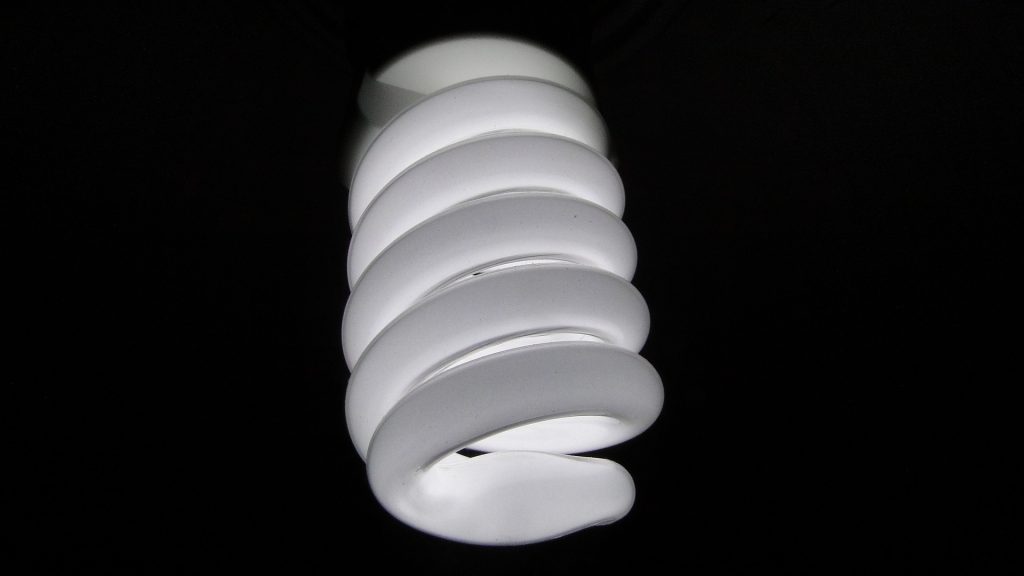
Invented in 1976 – in response to the 1973 oil crisis – Compact Fluorescent Lamps (CFLs) can be distinguished from any other type of bulbs on the market due to their distinctively bold designs.

CFLs work by transmitting an electrical current through a tube containing argon, and a trace amount of mercury, in order to trigger the actual illumination. CFLs have a lifespan of 9 years

Considering that they use 75% less energy than incandescent light bulbs, you can expect to receive significant savings when you choose to use them, rather than choosing to use their competition.

Light-Emitting Diodes (LEDs)

Light-Emitting Diodes (LEDs), which were invented in the early 1960s, are rapidly taking over the lighting industry. This is due to their being highly effective.

LEDs work by connecting a diode (hence their name) to an electrical current. Electrodes are then triggered within the diode, which forces those electrodes to release photons, thus making light.

While the initial costs of LEDs are typically higher than any of the other light bulbs we’ve mentioned, their lifespan being 25% longer than incandescent bulbs, makes the price seem almost inconsequential.

A Professional Recommendation

If you’re looking to pave the way towards lower monthly energy bills, then you may definitely want to consider purchasing and installing LEDs throughout your home.

This post brought to by your friends at A&H Electric. If you would like more information, or are just in need of reliable electricity repair or installation services, please be sure to contact us at (936) 756-0442

4 Electrical Issues That You Can Troubleshoot in Your Home

Most electrical problems need to be handled by a licensed electrician, like the ones at  A&H Electric.  If you are not a qualified professional, a mistake could be made that could cause an electrical fire and the results could be disastrous!  Every year many house fires are caused by improper electrical wiring, so if you aren’t sure, don’t try to fix it yourself.  There are, however, a few problems that can be safely solved with a little bit of troubleshooting.

“4 Electrical Issues That You Can Troubleshoot in Your Home”Continue reading

Banned: 40- and 60-watt Incandescent Bulbs

Turn Lights Off

Do you recall back in 2007 when George W. Bush signed an energy bill that would, over time, remove incandescent light bulbs of 40- and 60-watts by 2014? Well, now the year is here and the ban of these not so energy efficient light bulbs will be removed from the shelves, as the production of these has already stopped. In fact, the government has already removed incandescent bulbs in 75- and 100-watts from the shelves since 2007 and we are not the first country to implement this.

The reason for this is to help save the consumers money over time. The 40- and 60-watt incandescent bulbs produce more heat which means you pay more for energy. Discontinuing these incandescent bulbs, theoretically, will benefit your wallet and save you money over time. There have always been energy-efficient options but they come with a pricier price tag. This could be the reason why the 40- and 60-watt incandescent light bulbs have remained so popular. Fact is experts agree and say that swapping our favorite bulbs for a bit pricier ones that are more energy-efficient will save us money on our electric bill over time.

“Banned: 40- and 60-watt Incandescent Bulbs”Continue reading

Electricity, More Than Just Power


Electricity is a crucial thing for many of us to have. It powers and charges are cellular phones, personal computers, microwaves, refrigerator, etc. These house hold items have become important objects to have in our daily lives. As a result, electricity has also become important in order to accomplish tasks each day.

For example, many who sit at a desk for work usually work with computers. Without electricity to power our devices, we would not be able to turn on our computers to enter and receive information. Time and time again, we realize how much of a necessity it is when the power goes out in the neighborhood, town, city, or wherever. Nonetheless, the outcome is still the same. We, as people have grown to have electricity all around us, for the most part.

“Electricity, More Than Just Power”Continue reading

Replacing a Light Switch

When the word, Electrical, is heard, many people are scared off by the job. This we can understand, because electricity can be very dangerous and life threatening, if handled with incorrectly. For this reason, there are not many things we can recommend to do without a professional electrician.

Nonetheless, there are a few simple task that can be done around the house involving electricity. Have you ever replaced a light switch panel? This needs to be replaced from time to time due to corrosion and/or due to paint. No need to fret, this job can be completed in no time and without injuries, if done properly, of course.

“Replacing a Light Switch”Continue reading