CREDIT INFORMATION

Due to recent "Cyber Theft" and "Fraudulent Copyright Violations" please contact main office 936-756-0442

EMPLOYEE LIST

For employee information please contact main office 936-756-0442

David Heintz
President
A & H Electric Co.
3505 N. Loop 336 West
Conroe, Texas 77304
Office: (936) 756-0442

Protect Your Home with a Whole-House Surge Protector

Each electronic device in your home, from your HVAC unit to your large screen television, and high-tech audio equipment has a microprocessor. Without adequate protection, power surges can destroy these microprocessors, rendering your home electronics and/or appliances completely useless. The cost to replace each damaged device is much more expensive than installing a whole-house surge protector.

Where do surges come from?

Power surges can originate from external and internal sources. External sources include lightning striking nearby circuits and the electric utility company switching power grids. These surges can enter the house through several pathways. Internally, power surges result when large appliances like air conditioners and refrigerators turn on and off their motors, decreasing the flow of power. Static electricity can also cause power surges.

Whole-House Surge Protectors

Type 1

A Type 1 Surge Protection Device (SPD), also known as a secondary surge arrestor, protects against external power surges, such as those caused by lightning striking utility equipment, tree limbs touching a power line or your power company switching power grids. They are typically installed on the line side of the main service entrance. They are your first line of defense against potentially damaging power surges.

Type 2

A Type 2 SPD, also known as panel protector, is installed at your branch panel (more commonly referred to as your breaker panel). Wired directly to a dual-pole breaker in your panel, type 2 surge protectors protect all the circuits in that panel, as well as any subpanels that might be connected downstream. They generally provide protection against surges originating from inside your home.

Type 3

This category is one you are probably already familiar with. Devices, such as power strips and battery backups with built-in surge protection, suppress the lower level voltage spikes that can be especially damaging to high-tech electronics (e.g, computers, audio components, Smart TVs, and other household electronics). Power strips should specify that they have surge protection capabilities to be considered an SPD.

A full-featured whole-house surge protector diverts power surges away from your home and into the ground. Look for an SPD with a minimum rating of 50kA (1kA equals 1,000-amps). You will also want to make sure the device you choose complies with the most recent UL rating. Contact a licensed electrician in your area for professional whole-house surge protection device installation.


Holiday Lighting Safety Tips

The holiday season is upon us and, as a result many of you may be out late into the night hanging light sets and decorations, in an effort to create a little holiday cheer…and perhaps avoid the family much like Clark Griswold of National Lampoon’s Christmas Vacation.

However, before you go all out, there are several things you should NOT do when it comes to holiday decorating. At A&H Electric, we want you to have a happy and safe holiday season, so we’ve put together a list of safety tips for you to improve your holiday lighting experience.

The Do’s of Holiday Lighting

DO invest in LED (light emitting diode) light sets. While you may have to spend a little more, you’ll definitely save money in the long run, as these light sets cost pennies to run and last twelve times as long as traditional bulbs.

DO always make sure you have someone helping you with your display – especially when you’re using a ladder. Even if it looks like an easy job, hanging holiday lighting really takes two-people; one on the ground to hold the ladder steady and one hanging lights.

Do be a good neighbor. When Clark plugged in his lights, he took out most of Chicago, leaving his neighbors in the dark. Freezing out your neighbors on Christmas Eve probably isn’t the best way to spread holiday cheer.

Do inspect holiday lights. Frayed or otherwise damaged electrical cords should be properly discarded as they are the leading cause of structural fire. Lights with broken sockets should also be discarded because they too pose significant safety hazards. Burned-out bulbs? Swap them out. The risk of an empty socket is too great.

Do use the correct outlets. Any outdoor lighting should be plugged into a ground-fault circuit interrupter, which will automatically cut the power in the event of a short, or a spike in power. You should also use UL rated electrical cords.

Do properly store your light lights and outdoor decorations so you don’t end up with a giant ball of tangled holiday lights next year. You can find power cord holders at virtually any home improvement store or create your own using leftover cardboard.

The Don’ts of Holiday Lighting

Don’t use a staple gun to hang lights. Staples and nails can cause serious damage to your siding, bricks/stucco, and rain gutters. Using these can also cause a fire. Instead, consider specially designed light clips, which are safer to use and easier to install.

Don’t use indoor lights on the exterior of your home. Outdoor lights often burn hotter than indoor lights, and are equipped with water-resistant cords, so don’t use them indoors unless they specify they are indoor/outdoor compatible.

Don’t leave your lights on all hours of the night or when everyone is away from home. In the event a problem develops, it is essential that someone be on hand and alert in order to react quickly, thus thwarting any property damage or personal injury.

How to Eliminate Drafts Around Electrical Outlets

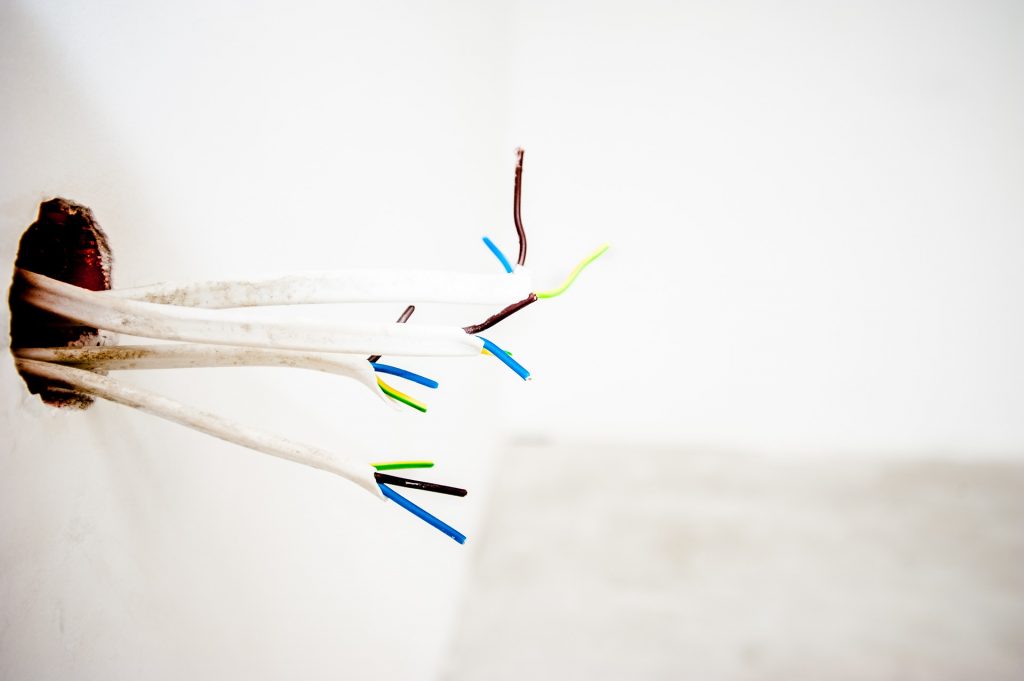
eliminating drafts

Drafts in a home can be more than just unpleasant. They may be an indication of air leaks, which can lead to decreased energy-efficiency, and increased monthly expenditures.

If you are feeling the chill or are simply tired of receiving high electricity bills, and you have already sealed around your doors and windows, checking your electrical outlets and light switches for leaks should be next on your to-do list.

Stopping drafts in their tracks, using the method outlined below, is one of the most cost-effective ways for making your home more energy-efficient – not to mention, more comfortable – thus reducing your monthly electricity bills.

Holes Everywhere

Although, electrical outlet and light switch covers may look innocent enough, they are notorious for harboring drafty boxes – especially in older homes and/or on exterior walls, according to the Department of Energy. How much air escapes through these boxes depends on just how airtight the exterior of your home is: if no air is getting into your wall cavities the problem may be minimal.

Materials Required

To seal up your home, thus increasing your energy-efficiency, purchase inexpensive foam outlet and switch cover seals at your local home improvement or hardware store. Make sure to purchase enough for every outlet and light switch cover in your home along with a couple tubes of high-quality caulk. You can further seal the leaks by buying tamper-resistant receptacles.

Steps for Eliminating Drafts

#1. Remove the outlet and light switch covers.

#2. Run a thin bead of caulk where the box meets the drywall.

#3. While the caulk is still wet, apply the foam seal on top, pressing firmly so that it connects with the caulk. This makes for an airtight seal.

#4. Install tamper-resistant receptacles or spring-loaded outlet covers. These are marketed for both energy-efficiency and child proofing. They’re a win, win!

#5. Don’t want to DIY? Contact a local, licensed, residential electrician.

Childproofing with Tamper Resistant Receptacles

Tamper-resistant receptacles
Image Courtesy of Pixabay

Electrical outlets form a major part of our everyday lives. You can find them in every room of your home. Lamps, phone charges, laptop cables, and power outlets all need to plugged into these outlets. Unfortunately, standard electrical outlets were not designed with children’s safety in mind, thus necessitating the need for childproofing – until now. Tamper-resistant receptacles are designed with your children’s safety in mind. Continue reading to learn more about these receptacles.

What are Tamper-Resistant Receptacles?

Tamper-resistant receptacles have spring-loaded shutters that block access to the contacts unless a 2 prong plug is inserted, helping ensure your child cannot insert an object, such as a hairpin, key, etc. The national electric code now mandates the use of tamper-resistant receptacles, so if your home was built in or after 2014, you may be in luck. There is no guarantee, however, that these were installed so it’s always best to make sure that all outlets are tamper proof.

Why Require Tamper-Resistant Receptacles?

The dangers of objects being inserted into electric outlets is very real. In fact, the National Fire Protection Association reports that each year, approximately 2,400 children are injured when they stick items into the slots of standard outlets (those that are not tamper-resistant). If your outlets are not tamper-proof, you have several options, including electrical outlet caps and sliding plate covers. If you’re open to making some modifications, consider replacing the outlets entirely.

Childproofing Occupied Outlets

Tamper-resistant receptacles, outlet covers and sliding plate covers can keep children safe when nothing is plugged in, but what about when you’re using the outlet? Tugging on a cord presents its own share of problems! Some outlet covers are designed to stop little fingers from tugging on cords. These covers feature a box that encloses the entire outlet plate while allowing room for a plug. Cords feed through holes in one side, letting you keep electronics plugged in without making the outlet vulnerable. Similar covers exist for power strips.

Contact a Local, Licensed Electrician

To make sure all your bases are covered, consider contacting a local, licensed electrician to conduct a full safety electrical inspection of your home. If you have a new home, they can inform you as to whether or not your outlets are tamper-resistant.

DIY Electrical Repair?

DIY electrical repair

Carrying out your own electrical work can be tempting. While DIY electrical repair may work out well when it comes to simpler projects, such as replacing a light switch or repairing a garbage disposal, larger projects require the expertise of a licensed electrician. A prime example of this is installing new wiring.

Aside from the inherent danger of working with electricity, your electrical system is one of the most critical components of your home. Failing to repair it properly can result in an array of extremely costly and even dangerous situations, so if you find yourself asking “Can I repair my electrical system myself?” you may want to reconsider.

Here’s why you should think twice about repairing your own electrical system.

The Process is More Involved Than You Think

While many do-it-yourselfers can easily spot problems, such as a blown circuit or lightbulb, there are often problems with electrical systems that aren’t so readily apparent to the naked eye – especially considering most of the system is hidden in the home’s walls. An electrician knows how to spot signs of trouble and is experienced at ensuring your system functions at its best.

DIY Electrical Repair is Flat-Out Dangerous

Electricity is extremely dangerous. It can cause serious bodily harm if a job isn’t performed correctly. Leave it to the professionals and don’t chance it to save a few bucks. Licensed electricians have considerable knowledge and are trained to implement several safety aspects when working with electricity.

Other issues that can arise from the improper repair of an electrical system include household fires and property damage. According to the National Fire Protection Association, “U.S. fire departments responded to an estimated annual average of 47,820 reported structure fires, involving electrical failure or malfunction.”

Improper connections and unstable wiring systems can also cause home appliances to prematurely age or worse – the wiring inside your home’s walls to fry or melt. In some states, insurance companies will not pay for any damages if electrical work isn’t performed by a professional, licensed and insured electrician.

Common Electrical Problems

common electrical problems

Why do my lights flicker?

This problem can be caused by several factors including plugging in an appliance that temporary draws more power causing the lights to flicker. Flickering lights are also often indicative of a defective or loose light bulb. If replacing or tightening the bulb doesn’t solve the problem, it is best to consult a licensed electrician, for expert diagnosis. The fault may be in the light fixture or its connections.

What is a GFCI device?

A GFCI or GFI is short for ground fault circuit interrupter. This inexpensive device is designed to protect you from severe electrical shocks. Through constant monitoring, a GFCI device immediately shuts off an electrical power circuit when it detects a differing flowing current along an unintended path, such as through water or a person. It can also shut off when outlets are overloaded to prevent electrical fires.

Why did my circuit breaker trip?

A circuit breaker plays a vital role in ensuring your safety by protecting the home from an electrical overload, which could damage your appliances, and ultimately result in an electrical fire. There are two conditions for circuit breakers tripping: 1) overloading and 2) short circuiting. It is common for older breakers (those 15 to 20 years old) to trip more often than newer circuits.

Why do my electrical outlets spark?

A brief spark may occur when power is suddenly diverted to an appliance. This is totally normal. However, if too much heat builds up in an outlet, the insulation can melt causing the wires to become exposed and ultimately increasing the risk for an electrical fire. This is known as a short circuit. Installation of a GFCI can prevent the overheating of electrical outlets thus ensuring your safety.

Why do my bulbs keep burning out so fast?

If you find yourself constantly changing light-bulbs, – at a rate of one every few weeks – you may be using a bulb with a higher wattage than your light fixture can handle. Check your light fixtures to make sure you’re using the correct wattage light bulbs. Other common causes include: too much voltage coming into your house, tightly screwed in light-bulbs, too much vibration, and poorly installed fixtures.

The Importance of Electrical Safety Inspections

electrical safety inspections

Our electrical systems run quietly in the background, inside the walls and ceiling of our homes, allowing us to power a great variety of modern-day comforts. Our smartphones, our laptops, the Internet, our heating systems, our televisions, our kitchen stoves and refrigerators are all powered by electricity. Most of us, myself included, would be lost without it.

However, according to the National Fire Protection Association (NFPA), electrical problems are the largest cause of property damage in home structure fires across the United States. In addition, the Consumer Product Safety Commission (CPSC) identifies small appliances plugged into inadequate or improper home wiring as the leading cause of accidental electrocutions. These statistics are simply not acceptable!

Electrical safety inspections can prevent you from becoming just another statistic. Perhaps this is a hard truth…but it is nonetheless the truth. You will end up very disappointed if you expect your electrical system to work properly without having provided it with the appropriate maintenance it so desperately requires. Without the proper maintenance, your system will fail, and you will find yourself without power – or worse.

What is an electrical inspection?

An electrical safety inspection is important for the safety of your home. Only to be performed by a certified electrician, electrical safety inspections provide a thorough examination of your entire electrical system, ensuring the safe operation of all electrical wires, systems, and components (e.g. appliances and other electronics). All must meet legal safety standards as well.

The National Electrical Code (NEC) is the code that all certified electricians operate under when examining your home. This code defines the parameters for minimally accepted standards across the United States. The Electrical Safety Foundation recommends having an electrical safety inspection performed: when purchasing a home, when a home is older than 40 years, when adding an appliance, and during and after a major home renovation.

Common signs of an electrical problem

In addition, if any of the following warning signs occur within your home, then it is a good idea to have a thorough electrical safety inspection performed as you may have a potential electrical problem that if left unchecked could start a fire in your home. A&H Electric will have one of our certified electricians come to your home, and thoroughly check the integrity of your electrical system, thus ensuring your family’s safety.

  • Lights dim or flicker
  • Wall outlets are warm, discolored, or spark when used
  • You notice loose outlets (meaning whatever is plugged in easily falls out)
  • You notice a tingling feeling when touching an appliance or metal enclosed device
  • Repeated tripping of circuit breakers or blown fuses
  • Continual burning odor coming from an area of the house, a room, or an appliance

Easy Fall Prep

fall prep

The upcoming arrival of fall represents many things to many different people. For children it means apple picking, hayrides, and trick-or-treating. For men it means the NFL – enough said. For women it means seasonal delicacies, new styles, and tall boots. Fall also means the return of seasonal favorites, family traditions, and spending time with loved ones.

Though it may be sad to bid farewell to the lazy days of summer, there’s simply something indescribably magical about fall, as Mother Nature paints a beautiful picture for all of us to enjoy. Fall’s arrival also signifies the approach of winter, which isn’t far behind. Here are a few projects to get your home ready for the coming cold.

  1. Maintain your electrical system

Fall is a good time to have your electrical system inspected by a certified electrician to make sure it’s working properly and that no shortages exist. Shorts in wiring and related equipment account for 63% of all home structure fires from 2007 to 2011, according to the National Fire Protection Association.

  1. Periodically test smoke alarms

Working smoke alarms save lives! Smoke alarms and carbon monoxide detectors should be tested at least once a month, and batteries should be replaced every six months, to ensure proper function. One of the best ways to remember to change your batteries is when you change your clocks for Daylight Savings Time.

  1. Tune up your furnace

Make sure your heating system will get your through the winter months by scheduling an annual furnace tune-up. If you haven’t already, you should consider replacing an outdated thermostat, with a programmable or smart thermostat. Replace your air filter for increased energy and monetary savings.

  1. Clean out gutters and downspouts

Fall foliage is beautiful – there’s no doubting that – but not so much when it builds up in your gutters. Clogged gutters can cause water to back up against the house potentially damaging your home’s roof, siding, and trim. Clogged gutters can also help create damaging ice dams.

  1. Seal up air leaks

A home with air leaks around windows and doors can account for up to 10% of your heating bills, according to the U.S. Department of Energy. Weather-stripping and caulking materials are easily the most cost-effective methods for sealing off air leaks. It’s a project that rewards you throughout the year; not just during the winter months.

Are You Protected Against Power Surges?

Do you have expensive electronics such as big screen TVs, bluray players, and gaming consoles? Then you need a surge protector! Surge protectors, which aren’t necessarily the same as power strips, can keep all of your electronics and appliances safe from becoming useless due to a power surge.

Dangerous Power Surges & Spikes

Your home’s electrical sockets were designed to provide a consistent amount of voltage; which your electronics depend on for power. An increase in the amount of voltage they receive, no matter how short, can have devastating effects on both your electronics and wallet.

What causes power surges? Power surges are often the result of lightning strikes, power outages, and malfunctions in the power grid (your electricity company is responsible for maintaining the grid). Surges tend to last at least three nanoseconds. Anything less than that is considered a spike.

Power surges can, unfortunately, break down the electronics’ circuit board, wires, or both – no matter how old (or new) it may have been. The increase in voltage can render them completely inoperable. Damaged upon repair the only remedy is replacement.

So How Do You Protect Yourself?

You install a surge protector of course! Surge protectors, which easily connect to a standard electrical outlet, can safeguard you from a power surge’s potentially devastating results. Relatively inexpensive, surge protectors generally come in a magnitude of sizes; even travel sizes.

I personally have one that was designed to fit 10 devices plus my modem’s coax cables (in and out). Surge protectors work by diverting the energy over the safe threshold to a protective componenent that ensures only the safe amount of voltage reaches your electronics.

For the peace-of-mind you’ll receive – surges protectors are priceless!