CREDIT INFORMATION

Due to recent "Cyber Theft" and "Fraudulent Copyright Violations" please contact main office 936-756-0442

EMPLOYEE LIST

For employee information please contact main office 936-756-0442

David Heintz
President
A & H Electric Co.
3505 N. Loop 336 West
Conroe, Texas 77304
Office: (936) 756-0442

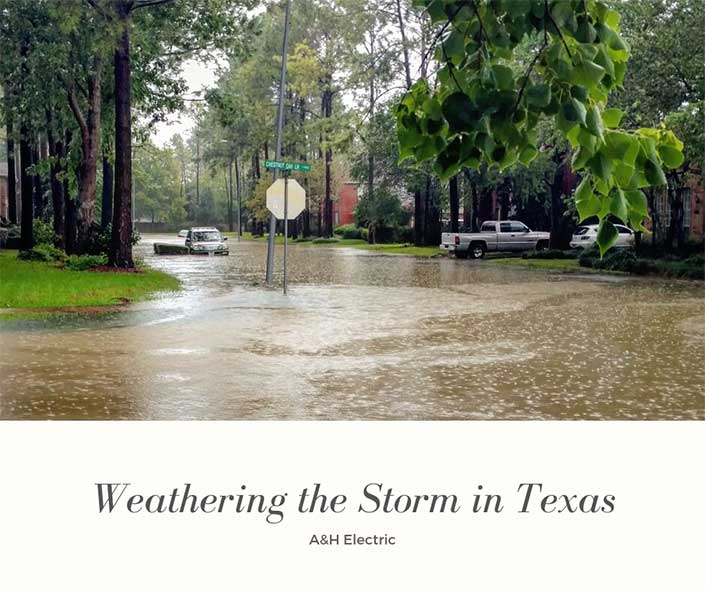
Open post Weathering-the-Storm-in-Texas

Weathering the Storm in Texas


With the continued tropical storm season, keeping you and your family safe is essential, and knowing how to prepare can save you a lot of stress. Chances are your area could experience flooding and even a loss of power. How should you prep and for how long? When do you need a professional electrician? Note: The typical hurricane season lasts from June 1st to November 30th each year.

How to prepare for a tropical storm or hurricane?

With that in mind, there are a few months left in the season, and if you are unprepared, then these tips will help you. First, know your evacuation routes in case you need to leave your home to be safe. The recommendation is that you have a plan of action already mapped out in case you need a fast escape.

Next, you will want to create a home safety kit if you do not already have one. You can always find useful tips for safety kits online that will give you a good idea of what you will need. Make sure that your bag is in an easy-to-locate area.

You will also want to stock your home with necessities, so that it is easier to find everything you need during and after the storm. Keep all items somewhere dry and easily accessible. Ready.gov provides a good list of supplies to keep on hand.

Be aware of the zone you live in and listen to safety instructions from your local news and community. Make sure that you know how to store any medications that you or family members may need in case you lose power. Before the storm hits, ensure that you remove any trash in your home and that your vehicle’s gas tank is full.

Lastly, before a storm hits your area, make sure to keep any pets close and that they have identification. Once the storm hits, remain alert, and stay in a safe part of your home with your pets and family. After a storm has passed, be cautious when returning to your home or going outside. There could be dangerous debris and fallen power lines in standing water.

What to do when your electrical system is damaged?

What should you do if a storm has damaged your electrical system? A professional electrician can safely handle your electrical service and repair needs following severe weather.

Power issues and water damage can do serious harm to your wiring and put you and your family in harm’s way. Most are unaware that lightning strikes even ten miles away can cause power issues by creating power surges.

Some water damage is inevitable in Texas, but even though your wiring is protected, prolonged exposure to water damages your home’s wiring. After massive storms contact a professional electrician to inspect and replace any damaged wiring.

Damage to your home’s electrical systems is a repair job better left to a licensed electrical service and repair company.

Contact a Professional Electrician Today

If you’d like to schedule an appointment for electrical service and repair, or you have any questions, contact A&H Electric at (936) 756-0442. A&H Electric specializes in the installation, repair, and service of electrical wiring systems in both commercial and residential properties throughout Conroe and the surrounding areas of Texas. We can also perform comprehensive electrical safety inspections on request.

Be Prepared for When a Power Outage Strikes

power outage

In short, a power outage is any sudden, unexpected interruption in electricity. It can be relatively brief or, in rare situations, considerably longer. Extended outages primarily occur due to extreme weather anomalies. Disruptions can also impact one property or thousands. The latter, however is generally referred to as a blackout. Preparing for when the power goes out is vital for keeping you and your family safe.

Power Outage Causes

There are several potential causes for disruptions in power. The most common are associated with inclement weather, equipment failure, and downed tree limbs. Local wildlife has also been known to sabotage infrastructure. For example, in 2016, an entire country was left without power for more than three hours after a curious monkey fell onto a transformer, subsequently tripping it.

Stock Up on Essential Items

Ready.gov recommends assembling a preparedness kit. They encourage stocking it with the following essentials. No two kits, however, will likely look the same as some families may need to include items like pet food or prescription medications. Also recommended is including three-days of bottled water and non-perishable food for each member in your family. Suggested items include:

  • Whistle
  • Flashlights
  • First aid kit
  • Basic toolset
  • Extra batteries
  • Manual can opener for food
  • Solar or another phone charger
  • Battery-powered or hand-crank radio
  • Moist towelettes, garbage bags, and plastic ties

More information on building a kit can be found a ready.gov/build-a-kit.

What to Do During a Power Outage

  • Immediately report outages to your utility company
  • Stay clear of any downed power lines, or areas of debris or flooding
  • Disconnect all appliances and electronics to protect against damaging power “surges” when the power returns. Unplugging equipment can also help prevent grid overloads.
  • Keep refrigerators and freezers closed to preserve food. According to Foodsafety.gov, a refrigerator will keep food cold for about four hours, while a stocked freezer will hold its temperature upwards of 48 hours.

Do You Need a Whole House Generator?

A power outage can happen at any time. That is a given, but those that are measured in days, rather than hours can be cause for concern. All perishable food must be discarded after four hours without power, according to FoodSafety.gov. A standby generator can save you the cost of replacing the contents of your fridge or freezer in extended outages. Whole house generators must be installed in a ventilated outdoor area by a licensed electrical contractor. Always follow manufacturer instructions when operating a whole house or portable generator during a power outage.

Contact an Electrical Contractor Today

If you’d like to schedule an appointment with a licensed electrical contractor, or you have any questions, contact A&H Electric at (936) 756-0442. A&H Electric specializes in the installation, repair, and service of electrical wiring systems in both commercial and residential properties throughout Conroe and the surrounding areas of Texas. We can also perform comprehensive electrical safety inspections on request.
Call a Licensed Electrician for These 4 Red Flags


Licensed Electrician

“One in four U.S. homes are all electric.” That’s according to a 2015 survey conducted by the U.S. Energy Information Administration (EIA). The Residential Energy Consumption Survey analyzes energy consumption for these eight purposes: air conditioning, clothes drying, lighting, cooking, water heating, space heating, hot tubs, and swimming pools.

There’s no question that demand for electricity is considerably increasing. Residents are averaging 867 kilowatt-hours (kWh) of electricity each month. However, this data is often subjective, as many factors can influence the amount of energy consumed (e.g., geographic location and climate, home and household size, type and number of electronic devices, etc.).

With greater demand, comes an escalating need for greater responsibility, as the goal of any system is not only optimal performance but also safe operation. Electrical failures and malfunctions, according to the National Fire Protection Association (NFPA), were the second leading cause of U.S. home fires between 2012 and 2016. Protect your home by avoiding overloaded sockets and watching for red flags.

These four red flags necessitate contacting a licensed electrician in Conroe.

Hot Outlets

Although there are a variety of appliances that generate heat, that heat should never extend to the outlet, meaning the outlet or wall plate must never feel uncomfortably hot to the touch. Hot spots or, worse, scorch marks are strong indicators of unsafe electrical wiring. Immediately discontinue using that outlet, unplugging any appliances or electronics, until a licensed electrician can troubleshoot and repair the problem.

Flickering Lights

It’s one thing to have flickering lights at Halloween, but it’s another for ordinary lights to flicker or dim, as this often signals a loose electrical connection. If the flickering is contained to a single light fixture, the issue may result from either a loose bulb, faulty light switch or voltage fluctuation. To be on the safe side, it’s a good idea to call an electrician to evaluate your home’s electrical wiring.

Buzzing Noises

Electricity cannot be heard – unless things are not working properly. Buzzing, crackling, or other types of noise signal a serious problem. Noise is often a symptom of more significant problems and a potential fire hazard. Essentially, any noise emanating from your outlets is bad and requires calling an electrician. In the meantime, stop using the outlet until it can be serviced.

Tripping Circuit Breakers

Circuit breakers are designed to “trip” to prevent overloading. They will also instantaneously trip in the event of a short circuit or power surge. They play a key role in mitigating electrical hazards. If plugging in a small appliance causes the circuit breaker to continuously shut-off, the circuit is probably overloaded, preventing that and other appliances/electronics from being irreparably damaged. A licensed electrician can rectify this issue by connecting new circuits and redistributing electrical loads.

A&H Electric specializes in the installation, repair, and service of all electrical systems in both commercial and residential properties throughout Conroe and the surrounding areas of Texas. We also perform electrical safety inspections. Schedule an appointment with a qualified licensed electrician in Conroe today at (936) 756-0442.

6 Reasons to Replace Electrical Outlets

electrical outlets

From the kitchen to the bedroom, electrical outlets, also known as a receptacle are in every room of your house. Increased reliance on technology means they’re subject to a lot of wear and tear. It’s possible for them to become outdated as well. Old or damaged electrical outlets can put you, your family, and your home at substantial risk.

Here’s when to replace or upgrade your electrical outlets.

Replace

Loose contacts: When you plug something in and it immediately falls out, it’s your old, tired outlet that needs to be replaced. Loose contacts are not only frustrating, but they also pose a significant fire risk. Hire a certified, licensed electrician to replace your outlets.

Cracked outlet plates: Cracked outlet plates may seem harmless, but they allow dust, dirt and dander to get into your electrical system. A fire could then result. They are also an eyesore. The same is true of covers with holes or gaps. It is advisable to change both the plate and outlet.

Two-pronged outlets: Two-prong outlets are connected to two-wire cables that are not grounded. Grounding protects you and your electrical devices in case of a fault. These receptacles are NOT up to code and should be immediately replaced with three-prong outlets to meet the National Electrical Code (NEC).

Sparking or hot outlets: When excessive heat builds up in an outlet, it can melt the protective coating on the cables, resulting in the occurrence of serious problems. This is often the result of short circuiting, water exposure, or even age. Immediate inspection and subsequent replacement is the best course of action for sparking or hot outlets.

Upgrade

USBs: Outlets with integrated USB ports let your charge your smartphone, tablet, and accessories using only a cable. No more need for bulky power adapters! Most USB wall outlets still give you two standard outlets. These outlets are ideal for bedrooms, living rooms, offices, and kitchens.

Wi-Fi Compatibility: These are more an add-on then replacement. Smart plugs connect to your home Wi-Fi network and allow you to control your appliances and electronics straight from your smartphone. Most can also be voice controlled using a smart speaker like Alexa or Google Assistant.

Having the experts at A&H Electric inspect and replace your electrical outlets will help keep you safe. We specialize in the service, repair, and installation of all electrical systems for both commercial and residential properties. Contact us today at (936) 756-0442 for more information or to schedule an appointment.

Summer Electrical Problems to Watch For

Summer Electrical Problems

Summer is on the horizon.

That means longer days, warmer nights, and endless fun.

It also means increased reliance on air conditioning to stay cool.

This, along with heat and humidity can cause several summer electrical problems that you should watch for, as well as contact a Houston electrical contractor to repair.

Stormy Weather

Summer thunderstorms can interrupt power – sometimes for several days, depending on the storm’s severity. One of the first things you should do when the power goes out is alert your utility company of the outage. Installing a generator at least 30 feet away from your home can help ensure you’re not left in the dark while the power’s out.

There are several types of generators sold including portable and standby. These generators are available in a variety of fuel types such as gas, propane, and diesel. Some can even be connected to your home’s existing liquid propane or natural gas fuel supply (if applicable). They are also available in a wide range of power capacities.

Increased Consumption

Cooling demand increases during the months of June through August. There is also an increased demand for lighting, appliances, and electronics. The amount of money residents spend on energy tends to be higher as well. In fact, according to the EIA’s Short-Term Energy Outlook forecasts, electric expenditures will be upwards of $420.

The best solution is to conserve energy. You do not have to do without air conditioning, TV or lighting to save money. For every appliance, electronic or light bulb, there is now an energy efficient alternative. Other simple and cost-effective ways to save energy and money during Houston’s 90+ weather include:

  • Plug electronics into a power strip
  • Don’t heat your home with appliances
  • Caulk and weatherstrip around windows and doors
  • Check your air filter monthly, changing it as needed
  • Program your thermostat to save energy when you are asleep or away
  • Turn lights, fans, and electronics off when you leave a room or don’t need them

Summer Power Surges

A power surge is a sudden increase in voltage that can occur for several reasons. For example, power-demanding electrical devices like air conditioners, refrigerators and stoves can create a voltage spike when they’re switched on or when their motors kick in. Surges can occur because of lightning strikes as well.

Regardless of the problem’s source, power surges can cause irreparable damage to your electronics, and/or appliances within seconds. Having a certified Houston electrical contractor install a whole-house surge protective device (SPD) is your best defense against harmful summer power surges.

Home Electrical Equipment Maintenance Tips

Home Electrical Equipment

A homeowner’s to-do list can often seem endless. Clean the gutters. Mow the lawn. Declutter the garage. Deep clean the kitchen and bathrooms. Repair a leaky faucet. Change the HVAC filters. Then, there’s the big one: Maintain the home electrical equipment. Ensuring your home electrical equipment is in good shape can prevent damage, injuries, and high repair costs.

Here are some home electrical equipment maintenance tips.

Install Tamper-Resistant Receptacles

According to the 2008 National Electrical Code® (NEC), power outlets in homes with children are required to have tamper-resistant receptacles (TRRs), which are designed to protect them from accidental shock resulting from the insertion of foreign objects. TRRs are UL-listed for safety and reliability. If you don’t already have them, contact a licensed electrician to install tamper-resistant receptacles throughout your home.

Test GFCI Outlets

Short for ground-fault circuit interrupters, GFCI outlets are designed to constantly monitor electricity flow, and instantly “trip” anytime an imbalance is detected. Building codes require GFCI installation in rooms where there is water such as a kitchen, bathroom, laundry room, and garage.

You will notice two buttons on a GFCI: A red one, which activates the outlet after the built-in breaker is tripped, and a black one that tests it to ensure proper functioning. The U.S. Consumer Product Safety Commission (CPSC) recommends testing these outlets once a month as well as after installation or an electrical power outage.

To test your ground-fault circuit interrupters, plug a lamp into the outlet. Turn the lamp on and press the GFCI’s test button. Did the light go out? If not, the outlet is not working properly, and you should contact a licensed electrician to correct the problem and/or replace the outlet.

Check Weatherstripping

If the weatherstripping around your home’s windows and doors is brittle or cracked, replace it. Weatherstripping helps to reduce drafts as well as block energy loss. You can find several different materials available at most any local hardware or home improvement store. The right one to choose will depend on the style of the window or door. Just cut to size and install according to manufacturer instructions.

Change Your HVAC Filters

Your heating, ventilation, and air conditioning (HVAC) system circulates air throughout your home. Its goal is to ensure the occupant’s thermal comfort and acceptable indoor air quality. HVAC filters are just one of the many components that work in unison with the system. These filters should be changed every 30 to 90 days, depending on your system, and whether you have pets or household members with allergies.

Change Batteries in Detectors

Smoke and carbon monoxide detectors are installed for your safety. Ensure they work properly by testing them every month. Change their 9V batteries every six months, or earlier if the alarm chirps, warning that the battery is low. Alarms with non-replaceable batteries are designed to remain effective for 10 years. Follow the National Fire Protection Association (NFPA) guidelines for installation.

Label Your Breaker Box

Labeling the breakers in your breaker box, properly known as the main service panel, will save time for both your and an electrician. You can make nice, neat, black-and-white labels for each breaker with a label maker. Create labels that are easy to read and won’t cause confusion such as “Master Bed.,” “Hall Bath,” and “Laundry Room.” Label breakers that are not connected to anything as “Spare.”

Resolve to Save Energy in 2018

save energy

The beginning of a new year provides the perfect opportunity to update your home. When setting goals for your home, it’s a good idea to start by looking at your home’s energy efficiency or possibly, lack of. One goal that is easy to keep and will put money directly back into your wallet is to resolve to save energy.

Here are some ways to save energy in 2018.

Seal any air leaks. Sealing air leaks is a cost-effective way to cut heating and cooling costs, improve system durability, and increase comfort. It can also help to create a healthier indoor environment. The Department of Energy recommends using caulk and/or weatherstripping to seal leaks arounds doors, windows, and where any plumbing or electrical wiring comes through the home’s envelope.

Choose energy-saving lighting. LED lighting doesn’t just use less energy than traditional incandescent lighting, it also lasts up to 25 times longer, and turns on at full brightness almost instantly. LEDs are quite affordable – you can pick up a box of eight for under $20 at your local home improvement or hardware store. LEDs can also be controlled via a smart switch, or if using smart LEDs, a hub.

Install and set a programmable thermostat. It’s no secret that heating and cooling costs account for more than 40% of a home’s energy use. Switching from a manual to a programmable thermostat is one way to save up to 10% a year. The most basic programmable thermostat can be self-installed in under an hour, allowing you to easily set temperature settings for different times of the day. The best programmable thermostats come with a built-in application that can be controlled from a smartphone or tablet allowing you to control and monitor the temperature even when you’re not home.

Use a surge protector for your electronic equipment. Surge protectors (also called surge suppressors) protect your electronic equipment – home theater systems and gaming computers included – from damage in the event of random power spikes or surges. When shopping for a surge protector, it’s a good idea to get one with more outlets than you currently need, so you can add more components later. You can save $100 a year just by plugging your devices into a surge protector and turning it off at night.

Hire a professional to inspect and maintain your electrical system. A certified and licensed electrician will do a comprehensive audit of your entire electrical system, ensuring all wires, systems and components meet legal safety standards. Upon completion of the inspection, you will be provided with a detailed checklist, which includes areas in need of immediate attention and recommendations for improvement. The Electrical Safety Foundation recommends having a professional inspection done:

  • When purchasing a home
  • When a home is past 40 years old
  • When adding or upgrading an appliance
  • When completing major home renovations

Outdoor Holiday Lighting Tips

outdoor holiday lighting
Image Courtesy of Pixabay

Make the season really sparkle with outdoor holiday lighting. Here are some tips to get you started.

Holiday Light Planning

Whether decorating your house with one string of lights or multiple, planning is one step you can’t miss. Decide how many lights sets you’ll need by measuring the locations where they will be used. This will likely be along your home’s rooftop and around patios or porches. You can also find net lights for use on bushes and trees. Determine whether you want all white or all color light sets.

Inspect Light Strings

Carefully inspect previously used light strings and extension cords. Frayed or otherwise damaged electrical cords should be responsibly disposed of. There should also be no broken sockets or loose connections. The lights could short out and cause a fire.

Always Choose Weather-Resistant Lights

Any lighting you plan to use outdoors must safely stand up to the elements. Look for holiday lights that are UL-rated for outdoors. The same holds true for extension cords used outdoors. When unpacking last year’s decorations, if you find a set of holiday lights or an extension cord that you aren’t sure is rated for indoor or outdoor use, toss it and buy new ones.

Purchase LED Lights

Incandescent holiday lights are terribly inefficient, and despite careful storage, often emerge damaged. LEDs, while a bit more expensive, are a much better option. They use up to 75% less energy and last 25 times longer. Because they also produce very little heat, they are much safer to use for indoor and outdoor lighting. In addition, up to 25 strings of LEDs can be connected end-to-end, without overloading the socket.

Automate Your Lights

Eliminate the headache of having to remember to turn on and off your holiday lighting displays with a timer or wireless remote control. Keep in mind that you should never leave your lights on while you’re asleep or away from home. Holiday timers are available in a variety of styles, and for a variety of uses (e.g., outdoor or indoor), so it’s a good idea to read the packaging to find the right timer for your specific needs. Most timers are designed for a certain wattage. Make sure you don’t overload yours.

Be Cautious When Installing Lights

Use a good ladder when installing your lights. Also make sure someone is helping you with your display – one person on the ground to hold the ladder steady and the other hanging lights. Secure them with insulated holders (never use tacks or nails). Plug them into ground-fault circuits, which will turn off automatically in event of a short, or spike in power. Consider having your electrical system inspected by a professional electrician in Conroe annually to ensure safety.

Properly Store Holiday Lights

At the end of the season, store your holiday lights using cord holders or make your own using cardboard so that next year you don’t have to spend countless hours untangling them. It’s also a good idea to store them in a well-sealed container to avoid possible water or rodent damage. This will save you money on replacement costs.

Getting to Know Your Breaker Panel

Your breaker panel is just one big switch, filled with other smaller switches, called breakers. As a homeowner, you should only need to access the panel for these three tasks:

  • to reset a circuit breaker after it trips
  • to shut off power to the whole house if needed
  • to turn off power to individual circuits when installing a ceiling fan or replacing an outlet

What am I looking at?

Electrical main: You can, in the case of an emergency, shut off electricity to your entire home using this switch. Located at the top of most boxes, it’s the biggest breaker, usually 100 to 200 amps, depending on the house’s square footage.

Single-pole breakers: These general-purpose breakers likely make up most of the breakers in your box. They can handle 120 volts and are either 15 amps or 20 amps (reference the numbers on top of the switches for proper amps).

Double-pole breakers: Like the electrical main, they look like two switches joined together. They can handle 240 volts and are usually between 15-125 amps. These are for your large appliances, such as stoves, dryers, HVAC units, and water heaters.

Expansion (empty) slots: Many breaker boxes have empty slots, so that you can have a licensed electrician add additional circuits, as needed. This comes in handy if you add a suite of new appliances to your kitchen or want to install covered outlets outdoors.

There are also other types of special purpose breakers, such as Arc Fault Circuit Interrupters (AFCI) and Ground Fault Circuit Interrupters (GFCI) that are designed to provide additional safety protection from fire (AFCI), and electrocution (GFCI).

Why do circuit breakers trip?

A circuit breaker “trips,” shutting off the flow of electricity, ensuring your appliances and/or home don’t become damaged due to an overheating circuit. Before flipping the switch back, it’s important to determine what caused the circuit breaker to trip in the first place. The number one cause is circuit overload (discussed below), however, other, more serious causes, include:

  • Short circuits
  • Ground faults

Overloading occurs when you power on too many devices at the same time on the same circuit. For example, if you have a 15 amp circuit powering your TV, microwave, and lights all on at the same time, then the circuit breaker will trip to prevent overheating because you’ve exceed the capacity of the electrical wiring. Overheating appliances can also cause a circuit to overload.

The solution? Hire a licensed electrician to come and replace the circuit breaker. You should also consider redistributing some of your lights, appliances, and other devices to another outlet to avoid overloading the circuit. Having a properly labeled panel is important, as well.

Only You Can Prevent Electrical Fires

electrical fires
Image Courtesy of the NFPA

Electrical failure or malfunctions account for more than 45,000 home fires per year and result in 420 deaths, 1,370 injuries, and $1.4 billion in direct property damage per year according to the National Fire Protection Agency (NFPA). To help reduce your risk of electrical fires, keeping you and your family safe, follow these simple safety tips.

Start with an inspection

The electrical system in your home may need to be rewired if your home is more than 40 years old, you’ve made major home improvements or added major new appliances, if your home has two-prong outlets, you frequently trip breakers or blow fuses, or if your home has aluminum instead of copper wiring. Even if none of these situations apply to you, you can’t go wrong with an expert electrical inspection.

Don’t overload your outlets

Overloading is a common cause of electrical fires. This happens when you plug too many appliances into the same outlet using an extension cord or power splitter. The U.S. Fire Administration recommends buying power strips equipped with internal surge protection. This ensures that a strip shuts off as soon as it becomes overloaded. Keep in mind that strips and extension cords are a temporary solution, not a permanent one.

Don’t DIY It

If you want turn off the electricity to your home, and install dimmer switches or replace an old ceiling fan, go right ahead. However, when it comes to installing additional outlets or rewiring your home, always contact a qualified electrician. DIY electrical work is not advisable because of the potential for danger: electrical shock or fire. All aspects of electrical work are governed by very strict codes.

Additional Safety Tips

  • Install smoke detectors on each level of the home, and inside each bedroom
  • Test smoke detectors monthly to ensure that they are working properly
  • Establish an emergency evacuation plan, and practice with your family
  • In homes with small children, install tamper resistant receptacles
  • Use light bulbs that match the recommended wattage on the fixture
  • Ask a qualified electrician if your home would benefit from Arc-Fault protection
  • Never use extension cords to power major appliances, always plug into an outlet
  • Have a qualified electrician add outlets to reduce your use of extension cords