CREDIT INFORMATION

Due to recent "Cyber Theft" and "Fraudulent Copyright Violations" please contact main office 936-756-0442

EMPLOYEE LIST

For employee information please contact main office 936-756-0442

David Heintz
President
A & H Electric Co.
3505 N. Loop 336 West
Conroe, Texas 77304
Office: (936) 756-0442

Open post Making-Sense-of-Your-Home-Energy-Use

Making Sense of Your Home Energy Use

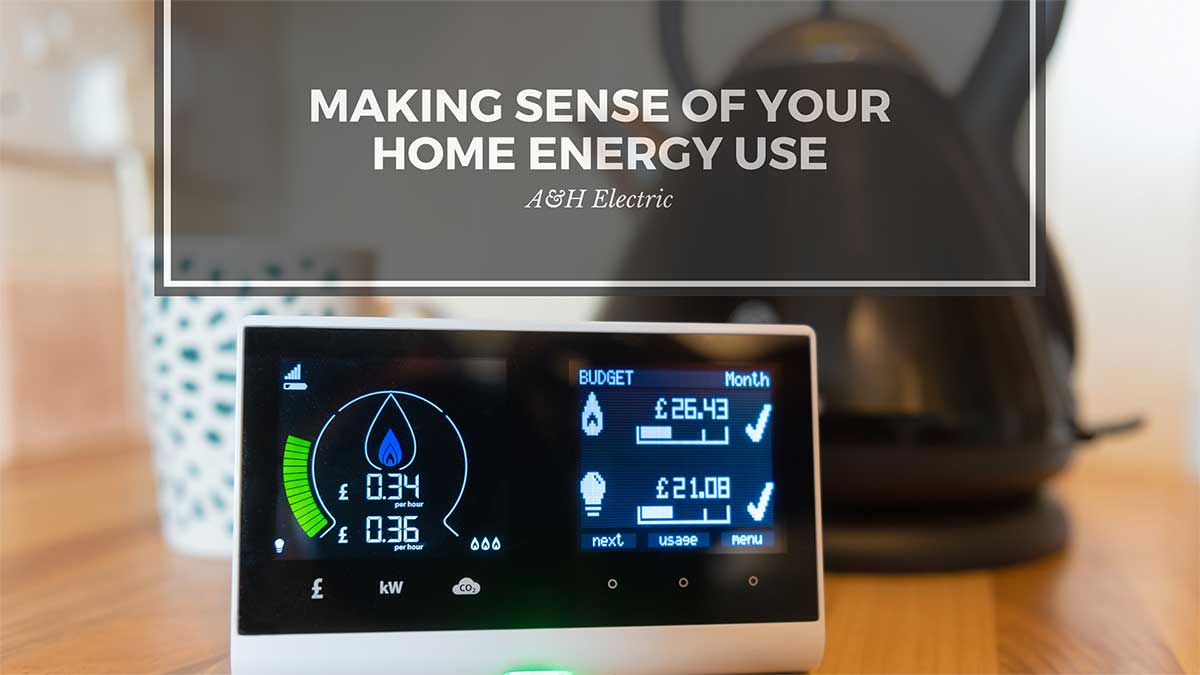
It can be challenging to determine what appliances and electronics are consuming the most electricity. According to the U.S. Department of Energy, especially troubling are those that consume power when in a standby mode, as they can add an extra ten percent to your monthly utility bill.

You can identify inefficient devices and behaviors by using residential energy monitoring and management systems. These systems are connected to your electrical panel and, to ensure optimal performance, are best installed by a certified electrician.

They can provide an accurate readout of hourly electricity use so that you can make the best use of your energy consumption habits. They can also help you recognize areas where energy-efficient improvements may be of benefit.

Household vs. Appliance Energy Monitors

There are two types of energy monitors: household and appliance. A certified electrician is needed to connect a home energy monitor to your breaker box. Hiring a professional ensures that the system is installed correctly and that it is optimally performing. It will provide you with useful data in real-time so that you can take steps to reduce your carbon footprint while saving money on your monthly utility bills.

The other type of energy monitor on the market today is called watt electricity usage monitors. These are incredibly portable and can be used for multiple devices. To use the monitor, plug it into an outlet, and then connect the appliance to the device’s outlet. They are useful for assessing major appliances’ efficiency, desktop and laptop computers, flat-screen televisions, and other popular electronics.

Contact a Certified Electrician Today

A&H Electric can expertly handle all your electrical projects, regardless of complexity. It is essential to have a licensed electrician complete all electrical work to ensure your system is up to code and operating both reliably and safely.

A&H Electric is a certified and licensed residential and commercial electrician specializing in installation, service, and repair. Our company is proud to help with your electrical system in Conroe, Texas, and neighboring communities.

Please schedule an appointment today at (936) 756-0442.
Open post Power-Your-Outdoor-Living-Spaces

Power Your Outdoor Living Spaces

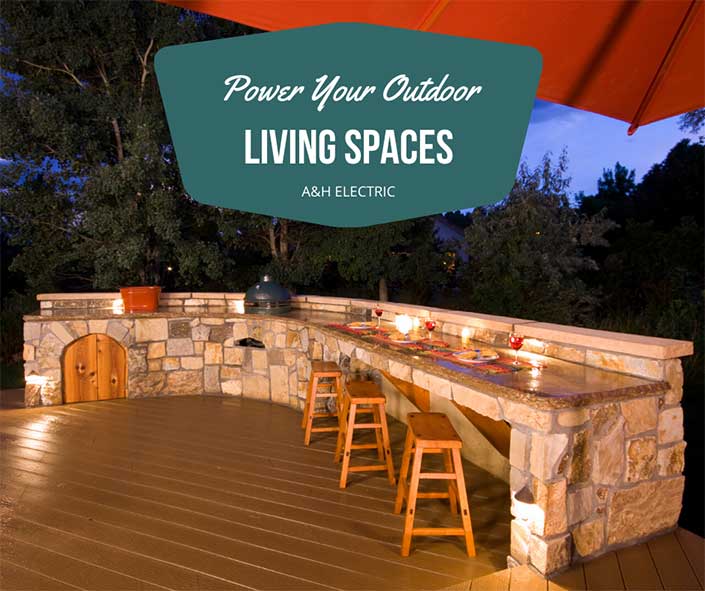
Imagine dining under the stars, having a backyard movie night, or unwinding next to the warmth of a outdoor fireplace. If these activities appeal to you, you may want to consider extending your living space outdoors. No shortage of interior features can be created outdoors, assuming a professional, certified electrician has completed the proper electrical work.

Electricity changes the name of the game in outdoor living spaces. Having a certified electrician provide electrical work allows you to power exterior kitchen appliances, big-screen televisions, pool and spa equipment, and electric fireplaces. Inspiration for outdoor living spaces can be found on Pinterest and home improvement sites.

Making sure that there is an adequate number of outlets is equally essential for plugging in all your gadgets, whether portable or stationary, so that there is little reason to head inside. Another factor to consider is the installation of lighting and ceiling fans. The latter will make it much more comfortable for you to spend time outside during the Texas summer.

Required Electrical Work

The type of electrical work you’ll need will ultimately depend on what you desire in an outdoor space. Let’s say you want a functional kitchen for cooking family dinners without heating the entire house. The appliances required for building this type of outdoor living space must comply with local codes. Your home may also need to be rewired to accommodate any new equipment.

The National Electrical Code (NEC) requires ground fault circuit interrupters (GFCI) outdoors. These devices are designed to trip the circuit breaker in the event of a ground-fault. For additional NEC and local code requirements, consult a certified electrical contractor, such as A&H Electric. 

Contact a Certified Electrician Today

Have a certified electrician complete all electrical work to ensure your system is operating reliably and safely. Schedule an appointment with an electrical contractor today at (936) 756-0442. A&H Electric is a certified residential and commercial electrician specializing in installation, repair, and service. Our company services Conroe and the surrounding communities of Texas.

Resources:

“Electrical Circuit-Interrupters.” National Fire Protection Association, nfpa.org/Public-Education/Fire-causes-and-risks/Top-fire-causes/Electrical/Electrical-circuit-interrupters.

Open post Keeping-the-Lights-on-this-Holiday-Season

Keeping the Lights on this Holiday Season


It’s time to start putting up those holiday lights and decorations, but electric companies in Houston and nationwide have some advice. One of the most common reasons that your circuits get tripped is because they’re overloaded, and the power load on circuits increases during the holidays. Previously, A&H Electric has discussed tips for outdoor holiday lighting, so let’s talk about keeping that power on during the holidays.

Reasons for a Tripped Breaker

Any electrician can attest to the fact that the three main reasons for a tripped breaker are overloaded circuits, shorts in wiring, and old breaker boxes. Your breakers can fail at any time, especially if it’s near the end of its life, but this time of the year is the most common time for overloads and shorts.

Keeping Breakers from Tripping

When hanging décor, make sure to nail into studs, rather than directly into drywall. The weight of whatever you’re attaching isn’t an issue, but potentially sending a nail through wiring behind your drywall is. If this happens, there is a substantial risk for short-circuiting, tripping breakers, and even fire hazards.

It’s getting colder all over the country, so now may be the time you bring out electric blankets or space heaters. Before you plug these items in, inspect your plugs and cords. If you see chew marks, cuts, exposed wires, or any other damage, don’t use them!

You can’t replace a breaker with one that’s rated for higher amps without upgrading all your wiring, so how do you prevent overloading all the time? Breakers are designed to cut electricity when circuits are overloaded and overheating to avoid fires.

Unplugging appliances that aren’t in use can help. Electricity’s still running into these devices when they’re off, unplugging them reduces your draw. For anyone that uses hairdryers, straighteners, and curlers, spread them out. They draw more electricity than you think, so using too many devices can overload your circuit.

Limit the number of extension cords and power strips you use during the holidays. Regular usage of these accessories is fine to set up your TV and gaming systems. Constant use of power strips for holiday decorations can overload circuits.

When you’re deciding whether to use incandescent string lights or LED string lights, reach for the LED products. Incandescent lighting uses twice the amount of electricity, and you can only connect two strands at a time. LED lights will use a fraction of the power and are perfect for decorating your entire yard, roof, and the front of your house.

Professional Electric Companies in Houston

If you have any questions about your electrical wiring or your electric systems this holiday season, call quality electric companies in Houston for professional answers. A&H Electric specializes in the installation, repair, and service of electrical wiring systems in both commercial and residential properties throughout Conroe and the surrounding communities of Texas. Contact us today at (936) 756-0442 for more information or to schedule an appointment.

Open post Weathering-the-Storm-in-Texas

Weathering the Storm in Texas


With the continued tropical storm season, keeping you and your family safe is essential, and knowing how to prepare can save you a lot of stress. Chances are your area could experience flooding and even a loss of power. How should you prep and for how long? When do you need a professional electrician? Note: The typical hurricane season lasts from June 1st to November 30th each year.

How to prepare for a tropical storm or hurricane?

With that in mind, there are a few months left in the season, and if you are unprepared, then these tips will help you. First, know your evacuation routes in case you need to leave your home to be safe. The recommendation is that you have a plan of action already mapped out in case you need a fast escape.

Next, you will want to create a home safety kit if you do not already have one. You can always find useful tips for safety kits online that will give you a good idea of what you will need. Make sure that your bag is in an easy-to-locate area.

You will also want to stock your home with necessities, so that it is easier to find everything you need during and after the storm. Keep all items somewhere dry and easily accessible. Ready.gov provides a good list of supplies to keep on hand.

Be aware of the zone you live in and listen to safety instructions from your local news and community. Make sure that you know how to store any medications that you or family members may need in case you lose power. Before the storm hits, ensure that you remove any trash in your home and that your vehicle’s gas tank is full.

Lastly, before a storm hits your area, make sure to keep any pets close and that they have identification. Once the storm hits, remain alert, and stay in a safe part of your home with your pets and family. After a storm has passed, be cautious when returning to your home or going outside. There could be dangerous debris and fallen power lines in standing water.

What to do when your electrical system is damaged?

What should you do if a storm has damaged your electrical system? A professional electrician can safely handle your electrical service and repair needs following severe weather.

Power issues and water damage can do serious harm to your wiring and put you and your family in harm’s way. Most are unaware that lightning strikes even ten miles away can cause power issues by creating power surges.

Some water damage is inevitable in Texas, but even though your wiring is protected, prolonged exposure to water damages your home’s wiring. After massive storms contact a professional electrician to inspect and replace any damaged wiring.

Damage to your home’s electrical systems is a repair job better left to a licensed electrical service and repair company.

Contact a Professional Electrician Today

If you’d like to schedule an appointment for electrical service and repair, or you have any questions, contact A&H Electric at (936) 756-0442. A&H Electric specializes in the installation, repair, and service of electrical wiring systems in both commercial and residential properties throughout Conroe and the surrounding areas of Texas. We can also perform comprehensive electrical safety inspections on request.

Curb Your Household Energy Use

household energy use

The average home uses a lot of electricity. In fact, according to the U.S. Energy Information Administration, the average electricity cost per Texas household is $1,801 annually or around $150 monthly; among the highest in the nation. On average, the typical Texas household uses 41% of their energy on appliances, electronics, and lighting; 19% on water heating; and 18% on air conditioning. Another 22% is used on space heating, making heating and cooling the second to largest expense, at 40%.

Here’s everything you need to know to curb your household energy use.

Monitor Your Electricity Use

To monitor and manage your household’s use of electricity, you only need one tool; an electricity usage monitor that provides electricity data in real-time. For example, the P3 Kill a Watt EZ, displays eight critical units of measure. Simply connect your appliances – supports 110 to 120-volt systems – to the unit to assess the efficiency of that appliance. The large LCD display will count consumption by the kWh, letting you calculate your cumulative electrical expenses and forecast by the day, week or month.

Put a Stop to Energy Vampires

Along with large appliances, which are the main culprits, electronics account for about 41% of home energy use. Even when switched off, they draw as much as 25% of their full power, so it’s a good idea to unplug them when they’re not in use. Power strips and surge protectors can also cut off electricity, on demand, or via a timer. To reduce your standby power loads and save money, consider using ENERGY STAR products, which draw less power when “off” than comparable non-energy-efficient products.

Take it Down a Notch or Two

Water heating accounts for roughly 19% of home energy use. Choosing an ENERGY STAR certified water heater over a standard model can save a family of four more than $3,400 in electricity costs over the water heater’s lifetime. Tankless and on-demand water heaters are both good options to consider. Other ways to save include reducing your water use, employing energy-saving fixtures, and dropping the temperature from 140 degrees to a still-steamy 120 degrees.

Be Smart with Your Thermostat

In Texas, air conditioning accounts for 18% of home energy use; more than double the national average. Installing a programmable thermostat is an easy way to efficiently control the climate in your home. Once programmed, the thermostat works to adjust temperature settings to different, desirable levels during set times throughout the week. For automatic comfort, smart thermostats learn your comings and goings within a week. They can save you up to 10% on cooling and heating costs.

Halloween Lighting Ideas

Halloween lighting ideas

Halloween is just a week away. That means it’s time to get your spook on. Between eerie tunes that cause spine tingling chills, decorations like hanging skeletons and faux spider webs and spooky Halloween lighting, there are plenty of ways to make your house the scariest on the block.

Here are few ideas for Halloween lighting and DIY decorations.

Halloween Lighting Ideas

Color Changing LEDs

Can’t decide on a color scheme for your Halloween décor? Try installing a couple color-changing bulbs to give your house a creepy hue. LEDs use 75% less energy than incandescent of similar brightness – so you won’t be surprised with a scary electric bill come November – and are designed to last 20-years.

Halloween String Lights

These lights practically scream Halloween. LED lights in the shape of Halloween icons, such as orange pumpkins, black cats and white ghosts shine bright indoors and out. You can hang them from your porch, fence, and trees or bushes to spook up your front yard. Make sure to inspect light strings for safety.

Colored Flood Light Bulbs

Ditch traditional white bulbs in your flood and spotlights for colored light bulbs. Orange and red colored light bulbs will create an ominous glow across your lawn, while blue and green hues are perfect for creating creepy cemetery scenes. These colors will also provide broad light ensuring the safety of trick-or-treaters.

DIY Halloween Decorations

Paper Silhouettes

Make cutouts from black paper, stick them in your windows, and back them with translucent white paper to create creepy shadows that are backlit with LED lights. Need artistic inspiration? Click here to download silhouette templates.

Pumpkin Porch Light Cover

Buy a pumpkin trick-or-treat pail – you can find these at your local dollar store or big box retailer – and using scissors, cut down the back’s center from top to bottom. You’ll also want to cut off the bottom. Pull the pumpkin down over the top of the light, ensuring the handle is secure, so that the pumpkin doesn’t fall off.

Halloween Mason Jar Luminaries

To make, simply place a sticker on the front of the jar, and spray the entire jar with primer and then paint in your choice of color. Allow time to dry between coats. Once dry, carefully peel the stickers off, and place a flameless LED tea lights inside.

Energy-Saving Tips for the Office

We have talked extensively about ways to save energy at home; now it is commercial business owners and managers turn for energy-saving tips. The following tips can yield significant savings.

Lights Off

Turn off lights when not needed. Turning off fluorescent lights when you plan on being out of a room for more than 15-minutes saves energy, extends overall lamp life, and reduces replacement costs. Contrary to popular belief, turning lights on and off does not use more electricity than leaving the lights on.

Improve Lighting Systems

Lighting consumes 25 to 30% of energy in commercial buildings (ENERGY STAR). Replacing incandescent bulbs with energy-efficient LED or fluorescent bulbs can reduce electricity consumption and improve your employee’s comfort. You may also want to consider replacing inefficient or outdated lighting fixtures.

Use Programmable Thermostats

When programming your thermostat, consider your normal business hours. During these hours, program the thermostat to 68˚F in the winter, and 78˚F in the summer. Depending on the season, program thermostats up or down outside these hours. Consider installing locking devices on thermostats to maintain desired temperature settings.

Establish a Preventative Maintenance Program

Establish an effective preventative maintenance program for your electrical system and equipment. Benefits include reduced repair costs, minimized or eliminated downtime, extended system and equipment longevity, and personal safety. Contact a certified electrician who services commercial offices in your area to get started.

Purchase ENERGY STAR Certified Office Equipment

When purchasing new office equipment, look for the ENERGY STAR label. The ENERGY STAR office equipment program promotes energy-efficient computers, monitors, imaging equipment, enterprise servers, data center storage equipment, small and large network equipment, and uninterruptible power supplies.

Getting to Know Your Breaker Panel

Your breaker panel is just one big switch, filled with other smaller switches, called breakers. As a homeowner, you should only need to access the panel for these three tasks:

  • to reset a circuit breaker after it trips
  • to shut off power to the whole house if needed
  • to turn off power to individual circuits when installing a ceiling fan or replacing an outlet

What am I looking at?

Electrical main: You can, in the case of an emergency, shut off electricity to your entire home using this switch. Located at the top of most boxes, it’s the biggest breaker, usually 100 to 200 amps, depending on the house’s square footage.

Single-pole breakers: These general-purpose breakers likely make up most of the breakers in your box. They can handle 120 volts and are either 15 amps or 20 amps (reference the numbers on top of the switches for proper amps).

Double-pole breakers: Like the electrical main, they look like two switches joined together. They can handle 240 volts and are usually between 15-125 amps. These are for your large appliances, such as stoves, dryers, HVAC units, and water heaters.

Expansion (empty) slots: Many breaker boxes have empty slots, so that you can have a licensed electrician add additional circuits, as needed. This comes in handy if you add a suite of new appliances to your kitchen or want to install covered outlets outdoors.

There are also other types of special purpose breakers, such as Arc Fault Circuit Interrupters (AFCI) and Ground Fault Circuit Interrupters (GFCI) that are designed to provide additional safety protection from fire (AFCI), and electrocution (GFCI).

Why do circuit breakers trip?

A circuit breaker “trips,” shutting off the flow of electricity, ensuring your appliances and/or home don’t become damaged due to an overheating circuit. Before flipping the switch back, it’s important to determine what caused the circuit breaker to trip in the first place. The number one cause is circuit overload (discussed below), however, other, more serious causes, include:

  • Short circuits
  • Ground faults

Overloading occurs when you power on too many devices at the same time on the same circuit. For example, if you have a 15 amp circuit powering your TV, microwave, and lights all on at the same time, then the circuit breaker will trip to prevent overheating because you’ve exceed the capacity of the electrical wiring. Overheating appliances can also cause a circuit to overload.

The solution? Hire a licensed electrician to come and replace the circuit breaker. You should also consider redistributing some of your lights, appliances, and other devices to another outlet to avoid overloading the circuit. Having a properly labeled panel is important, as well.